top of page

HVAC Safety Manual Templates in Canada: What You Need and Where to Get One

HVAC Safety Manual Templates

If you run an HVAC company in Canada, you already know the drill. A contractor wants you on a job, they ask for your safety manual, and suddenly you're scrambling to put something together that looks professional and actually meets provincial requirements.


This guide covers what an HVAC safety manual needs to include, which provinces require what, and how to get one without spending weeks building it from scratch or thousands of dollars hiring a consultant.


What Is an HVAC Safety Manual?

An HVAC safety manual is a written document that outlines your company's health and safety program. It's not just a formality — it's the foundation of how you demonstrate due diligence to clients, general contractors, and provincial regulators.


For HVAC companies specifically, a safety manual typically needs to cover:

  • Hazard identification and risk assessment — including refrigerants, electrical systems, confined spaces, and working at heights

  • Emergency response procedures — what happens when something goes wrong on a job site

  • Personal protective equipment (PPE) requirements — by task and environment

  • WHMIS 2025 compliance — handling and storing hazardous materials safely

  • Worker training and orientation — documenting that your team is trained before they work

  • Incident reporting — how you investigate and document near-misses and injuries

  • Supervision responsibilities — who is accountable on each job


Without this in writing, you're exposed. Most general contractors and commercial clients won't let you on site without it.


Do You Legally Need a Safety Manual in Canada?

Yes — though the specific requirements vary by province. Every province and territory in Canada has occupational health and safety legislation that requires employers to establish and maintain a health and safety program. For HVAC contractors with employees, this almost always means having documented written procedures.


Here's a quick breakdown:

  • Alberta — The Occupational Health and Safety Act requires employers to develop a health and safety program. For companies working on commercial or industrial sites, a written manual is essentially mandatory.

  • British Columbia — WorkSafeBC requires a written OHS program for most employers. HVAC contractors bidding on commercial work will be asked for it.

  • Ontario — The Occupational Health and Safety Act mandates a written program for employers with 6 or more workers. Smaller HVAC companies often need one for client compliance regardless.

  • Saskatchewan — The Saskatchewan Employment Act requires documented safety programs. ISNetworld-registered contractors need full documentation.


Even if your province doesn't mandate it outright for your size of operation, any client worth having will ask for it before awarding a contract.


What Makes an HVAC Safety Manual Different?

HVAC work has specific hazards that a generic safety manual won't address properly. A good HVAC safety manual needs sections that speak directly to:


  • Refrigerant Handling

    • R-410A, R-22, and other refrigerants require specific handling, storage, and disposal procedures. Your manual should reference WHMIS requirements and safe handling guidelines.

  • Electrical Safety

    • HVAC technicians work around live electrical systems regularly. Lock-out/tag-out procedures need to be clearly documented.

  • Confined Space Entry

    • Mechanical rooms, crawl spaces, and air handling units can all qualify as confined spaces. Your manual needs a confined space program if your crew enters them.

  • Working at Heights

    • Rooftop units are standard HVAC work. Fall protection requirements need to be explicit.

  • Heat and Cold Stress

    • Technicians work in extreme temperatures year-round. A solid manual addresses this, especially for outdoor work in Canadian winters.


If your safety manual doesn't cover these specifics, it won't pass scrutiny from a safety officer or an ISNetworld reviewer.


COR and SECOR: Do HVAC Companies Need Them?

The Certificate of Recognition (COR) program and its small-employer equivalent SECOR are voluntary certification programs that demonstrate your health and safety management system meets a recognized standard.


For HVAC contractors in Alberta working on oil and gas facilities or large construction projects, COR or SECOR is often a condition of bidding. In other provinces, it's increasingly expected by large general contractors even when not legally required.

A COR-ready safety manual is structured to meet the audit requirements — it's not just a collection of policies, it's a system. If you're building toward COR, your manual needs to be built for it from the start.


How to Get an HVAC Safety Manual Without Starting From Scratch

You have three options:

Option 1: Hire a safety consultant. Expect to pay $2,000–$5,000 for a custom manual. Takes weeks. Good if you have complex, multi-site operations or unique hazards — overkill for most HVAC companies.


Option 2: Build it yourself. If you know OHS legislation well and have the time, you can draft your own. Most HVAC business owners don't have either.


Option 3: Use a professional template. This is the fastest path for most small to mid-size HVAC companies. A well-built template gives you the structure, the required sections, and the compliant language — you customize it with your company name, specific procedures, and local details. Download today, submit tomorrow.


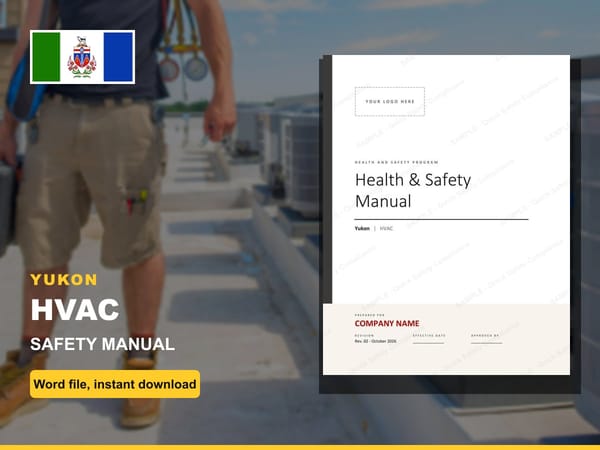
At Quick Safety Compliance, our HVAC safety manual templates are built specifically for Canadian HVAC contractors. They're fully editable in Microsoft Word, meet provincial OHS standards, and are structured to satisfy COR and ISNetworld requirements. No consultant needed.


Which Province Do You Need?

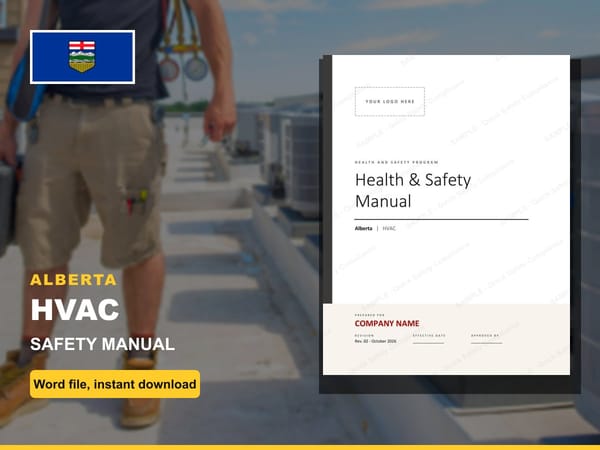
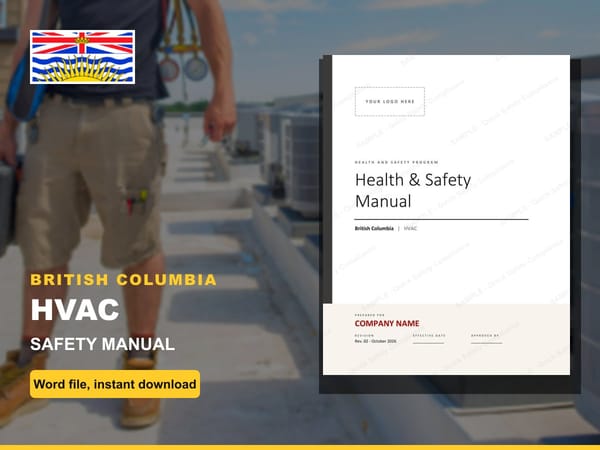
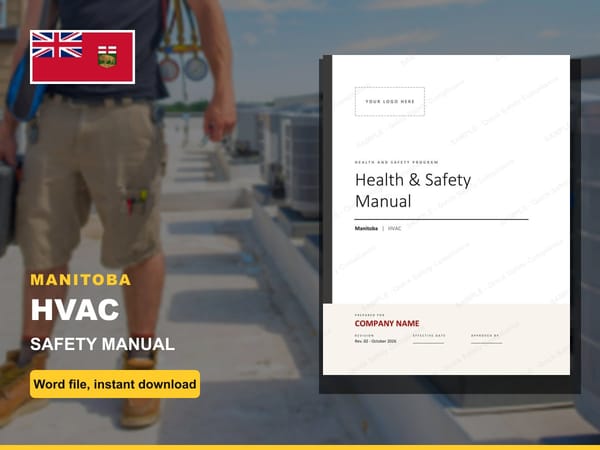
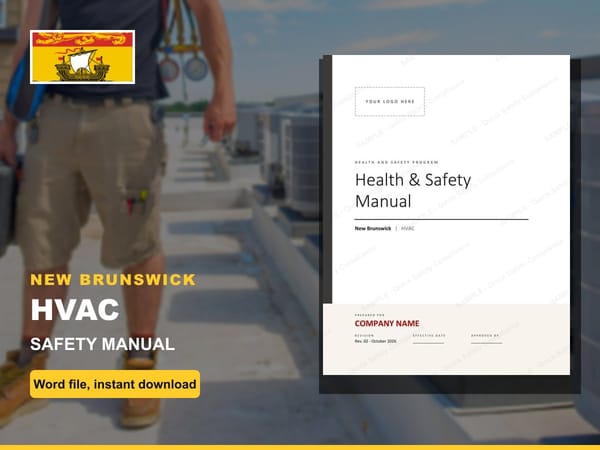
We carry HVAC safety manual templates for every province and territory in Canada. Click your province to download instantly:


Each template is province-specific — built to meet the OHS legislation in that jurisdiction. Instant download after checkout. Editable in Word. Ready to submit. Can't find your province? Browse the full HVAC collection here: quicksafetycompliance.com/shop-all


Bottom Line

If you're running an HVAC company in Canada and you don't have a safety manual, you're leaving contracts on the table and taking on legal risk you don't need to carry. The good news is this doesn't have to be complicated or expensive.

Get the right template, customize it with your company details, and you're ready to submit — usually within a few hours.


Comments


bottom of page