Everything in your download, and how to put it to work
One payment of $499 gets you the complete written program for your province and trade, the forms, the Implementation Kit, 52 toolbox talks and a free brand-it step. Here is exactly what each part is and what you do with it.
A complete written program, not a starter kit
An editable Microsoft Word manual written for one province or territory and one trade, organised into sections that follow the elements of a typical Canadian health and safety program. Our best-selling editions run 294 to 344 pages and 71,602 to 84,588 words.
- Management CommitmentHealth and safety policy, responsibilities, due diligence
- Competency and OrientationOrientation, competency, discipline
- Hazard AssessmentHazard reporting, formal and field level assessments
- Hazard ControlControls, PPE, violence and harassment prevention
- Codes of PracticeConfined space, fall protection, hearing and more
- Safe Work PracticesThe practices for your trade, A to Z
- Inspections and MaintenanceWorkplace and equipment inspections
- Emergency ResponseEmergency response plan, first aid, contacts
- InvestigationsIncident reporting and investigation
- Program AdministrationRecords and statistics
- Health and Safety CommitteesCommittee or representative terms of reference
- Additional PoliciesDrug and alcohol, working alone and more
- Health and safety policy
- Violence and harassment prevention
- Drug and alcohol
- Emergency response plan
- Incident investigation
- Committee terms of reference
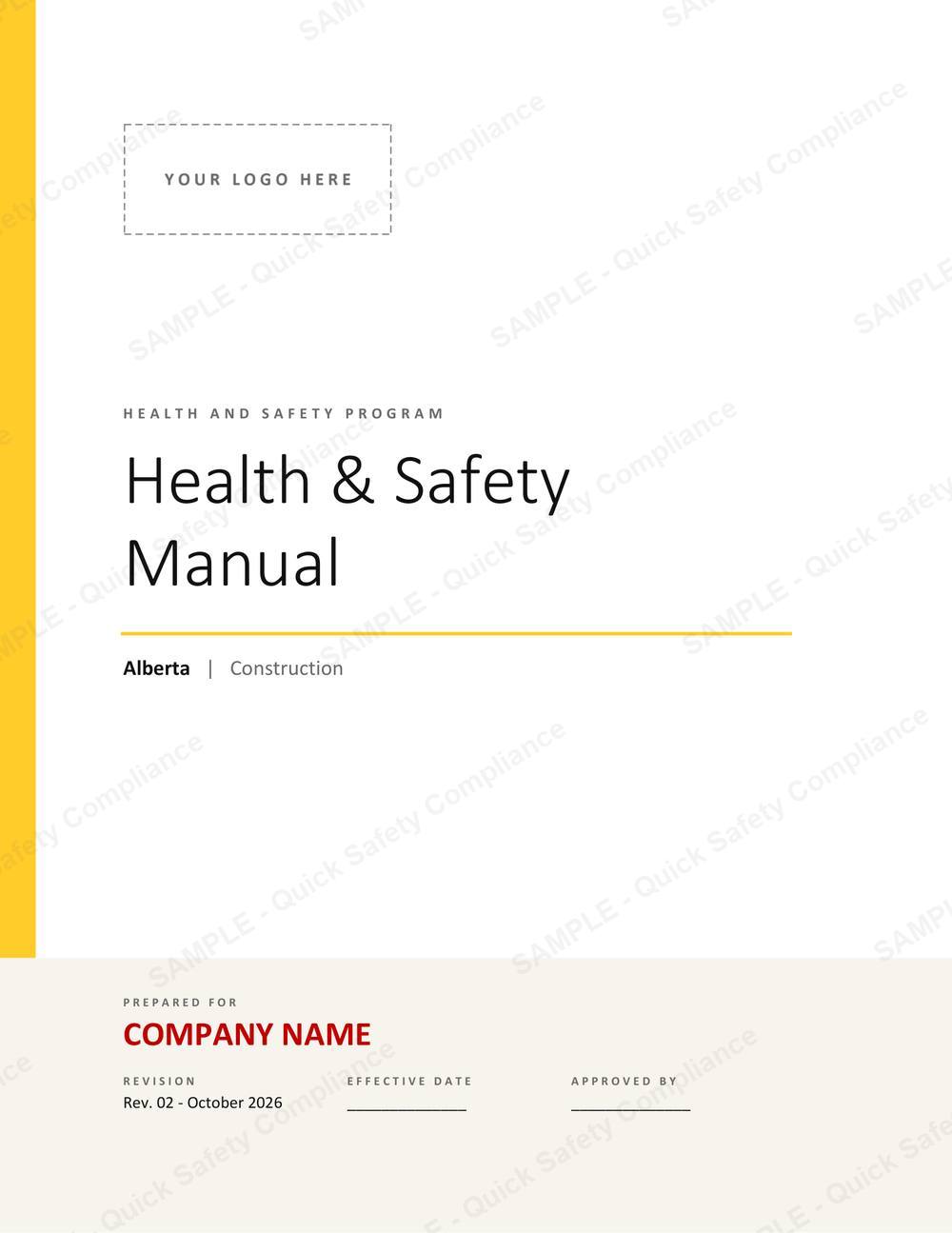
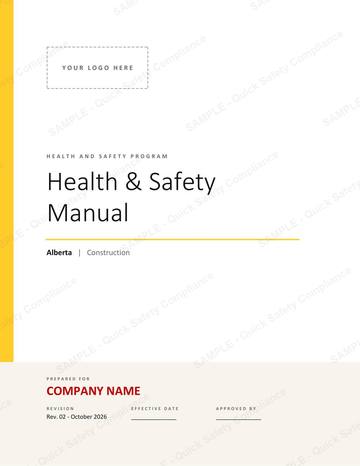 Cover page with space for your logo, ready to brand as your own
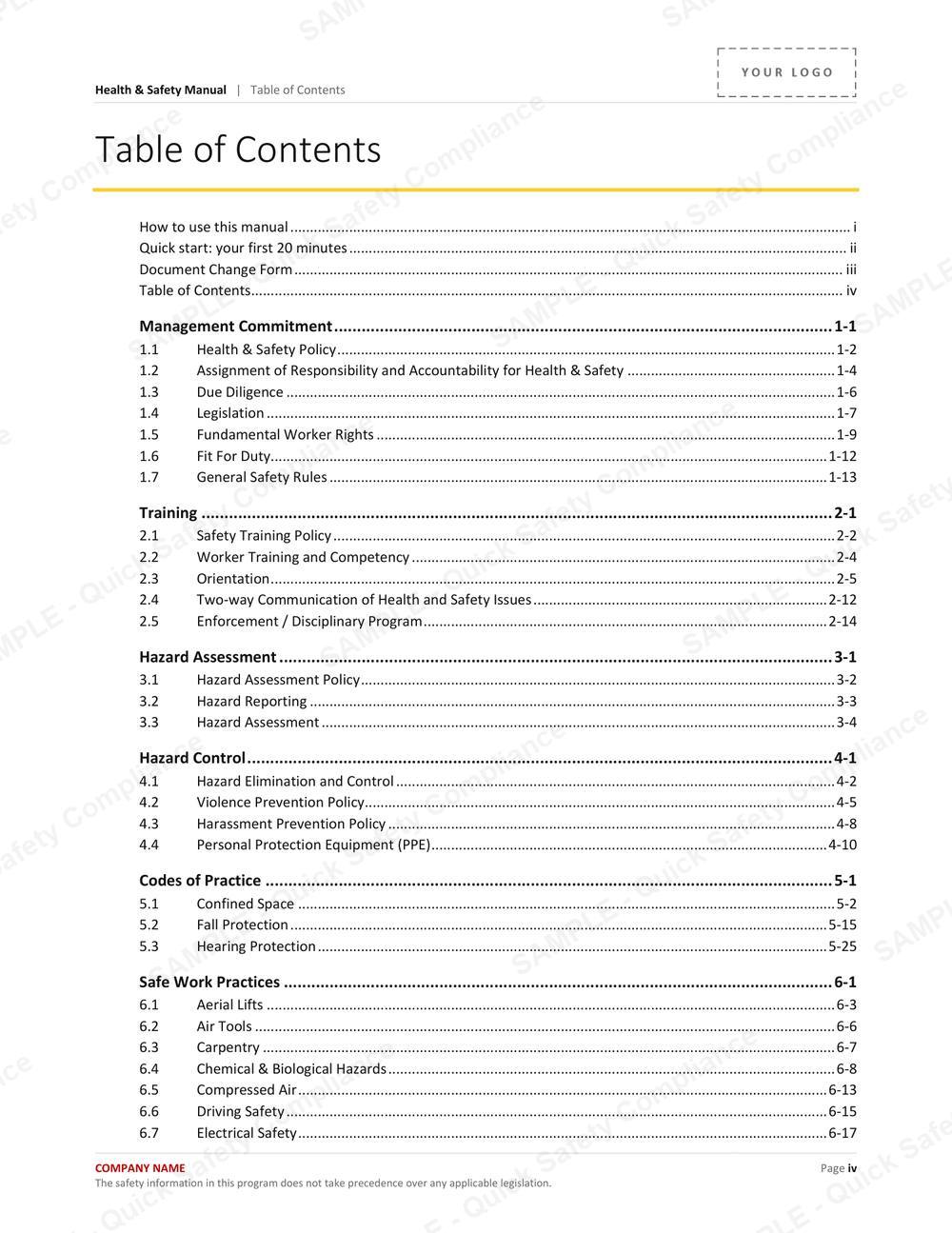
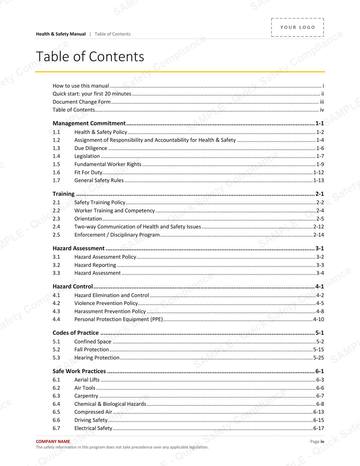 Table of contents, page 1 of 3
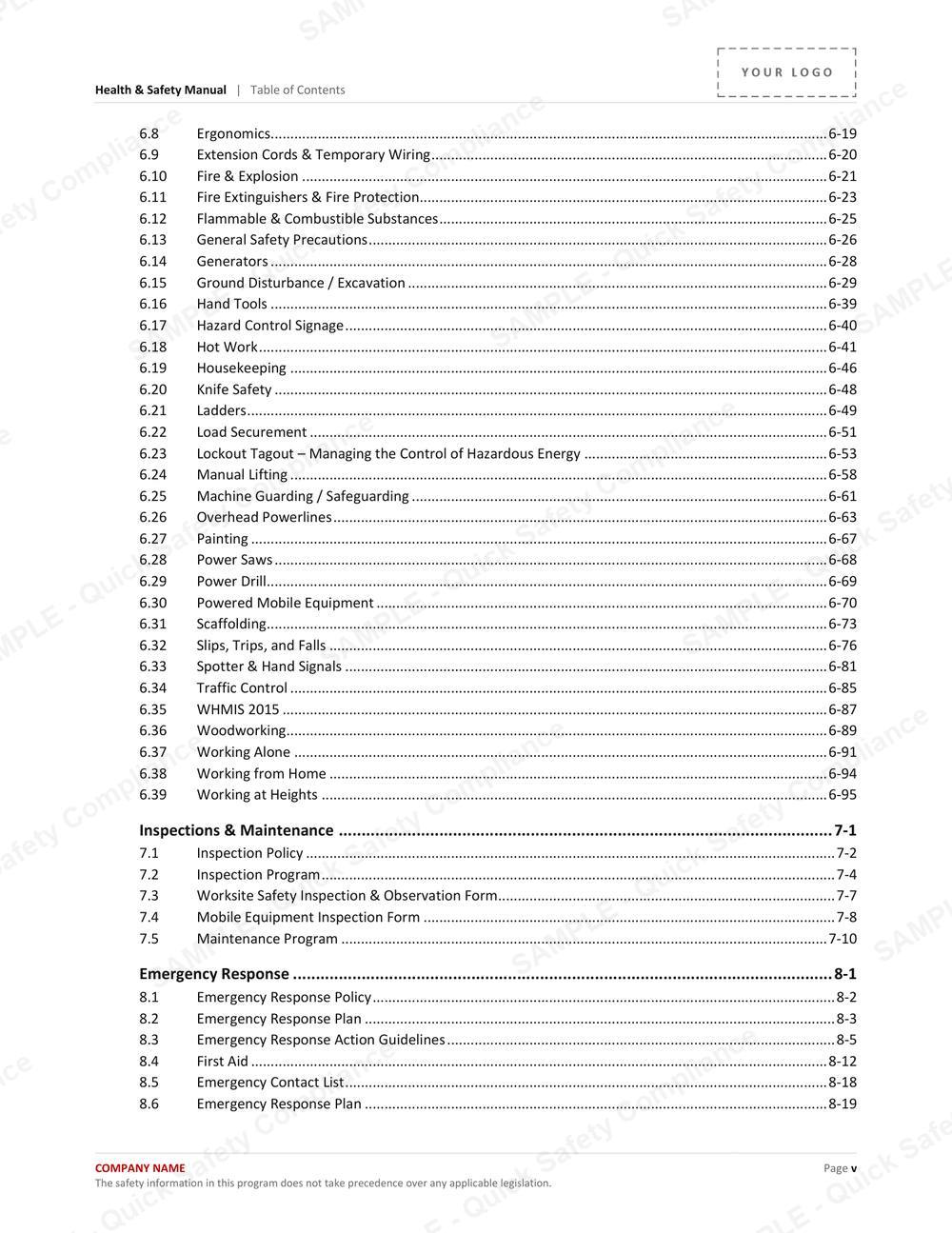
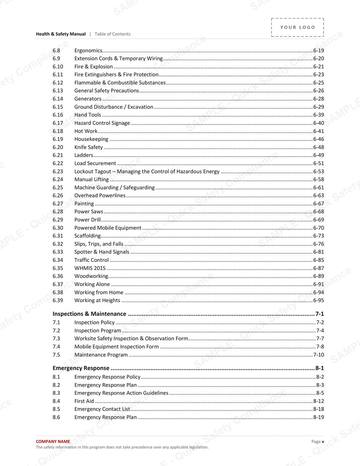 Table of contents, page 2 of 3
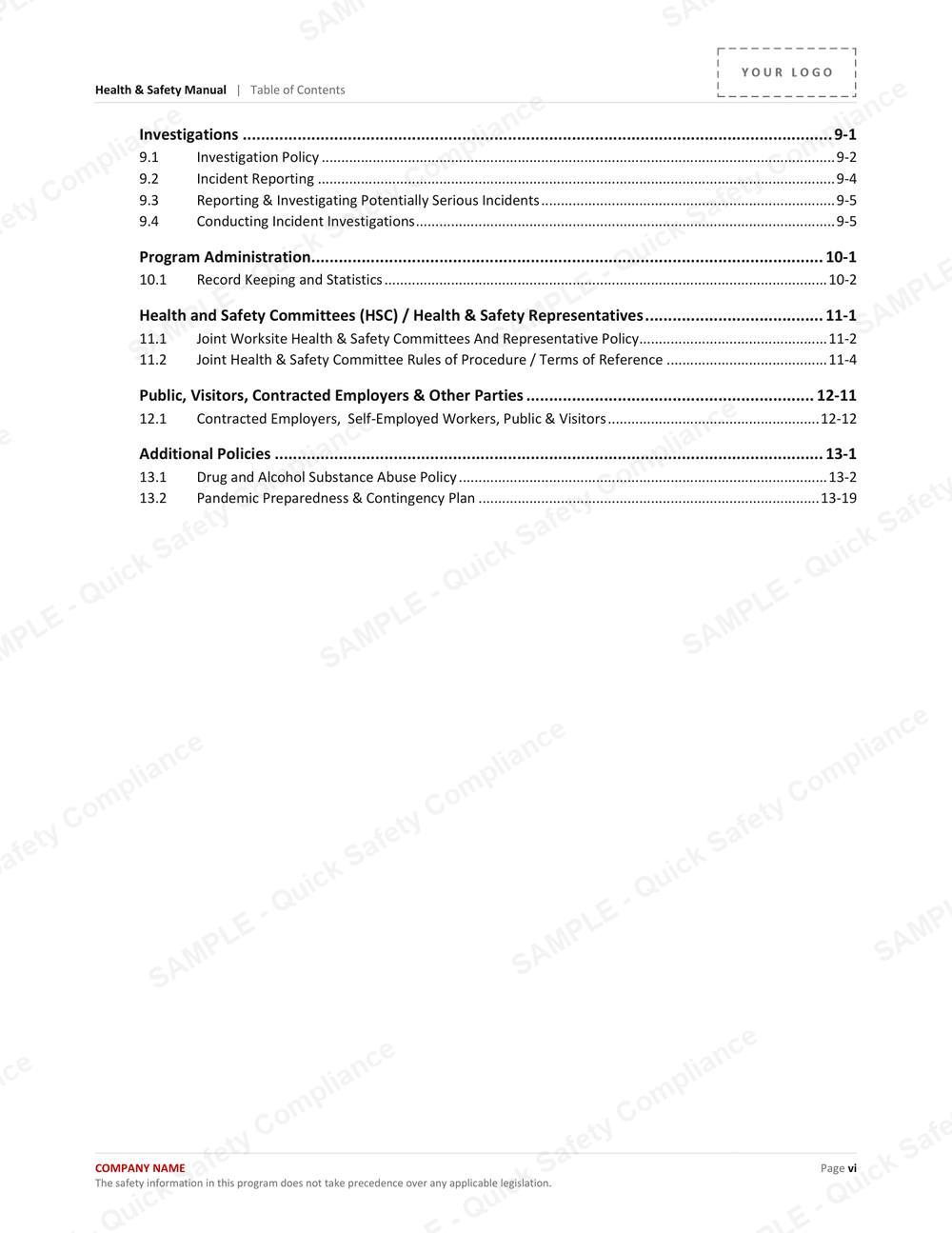
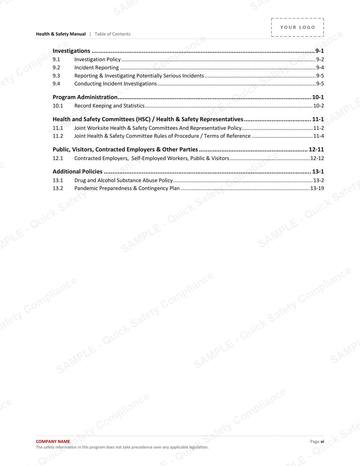 Table of contents, page 3 of 3
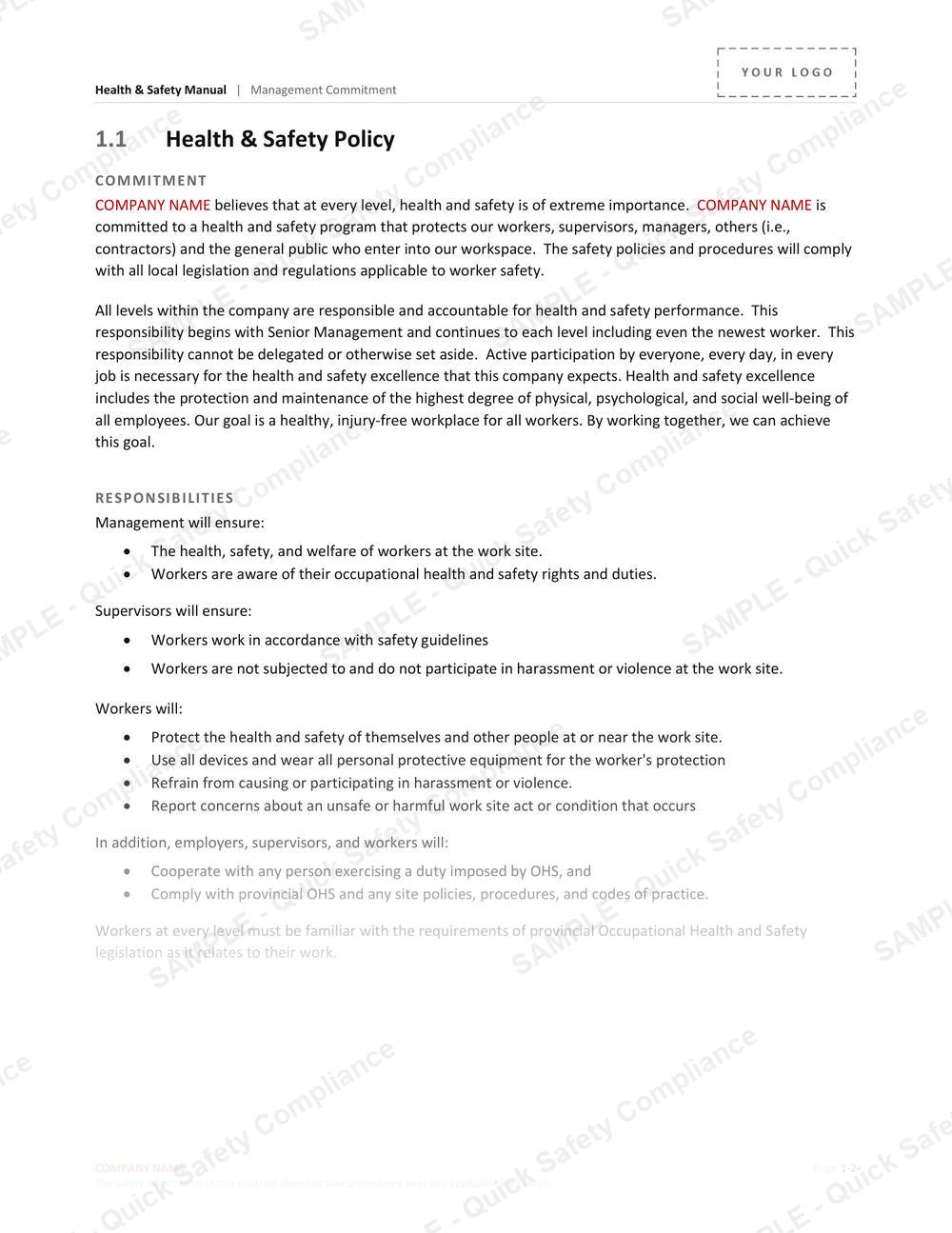
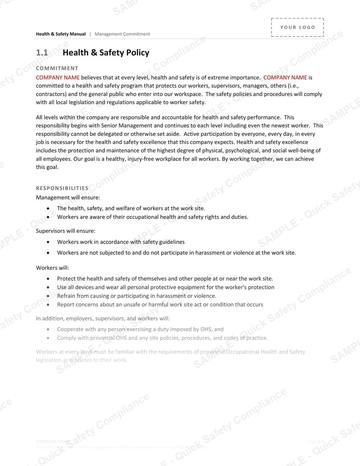 Health and safety policy: your company name drops in throughout
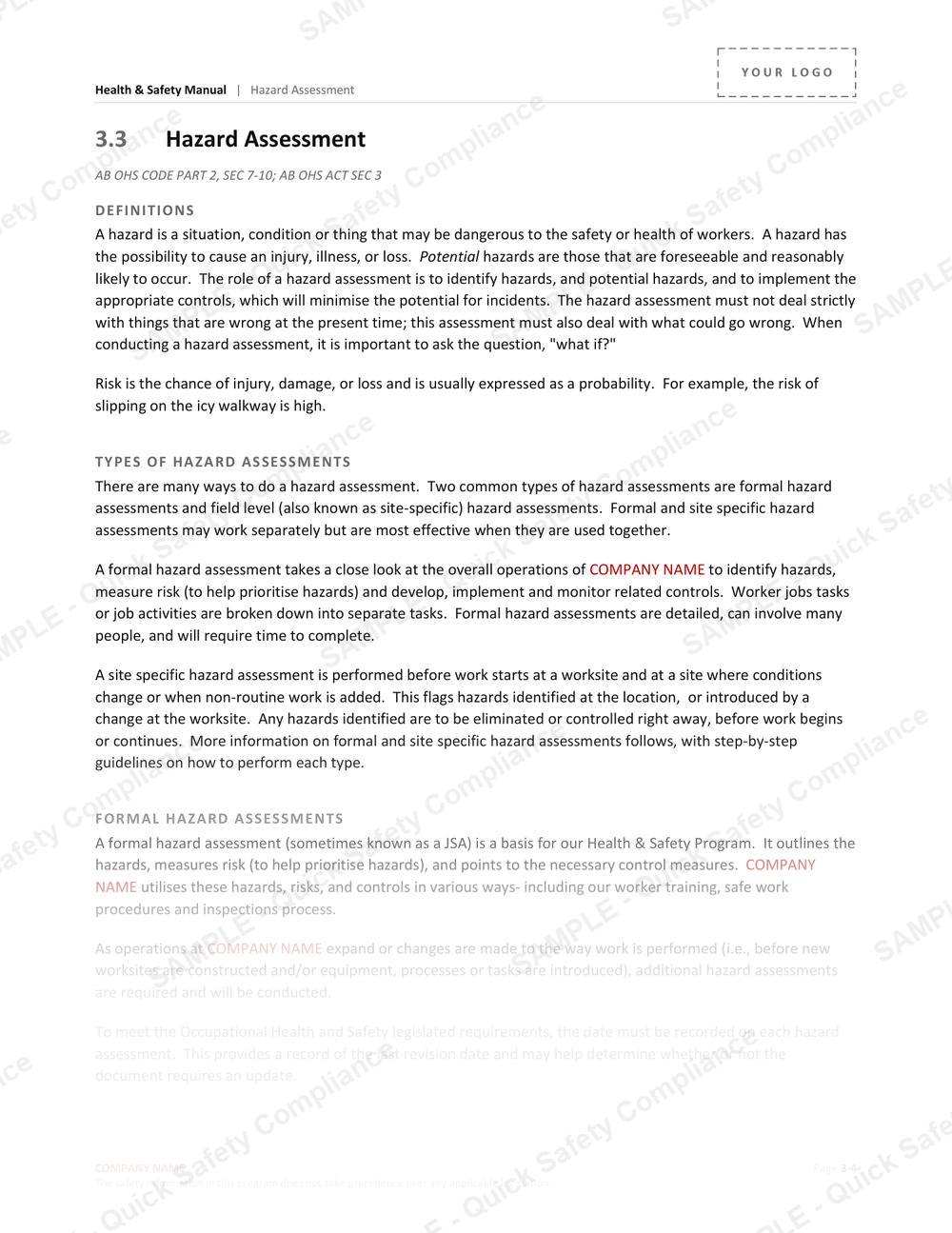
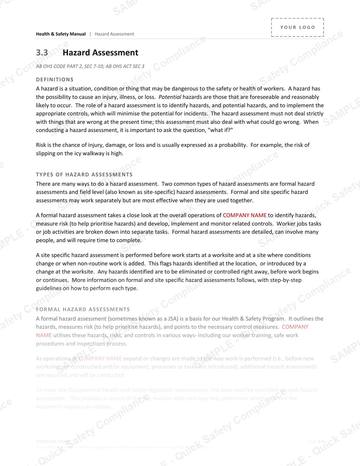 Hazard assessment program: hazard types, formal and field level assessments
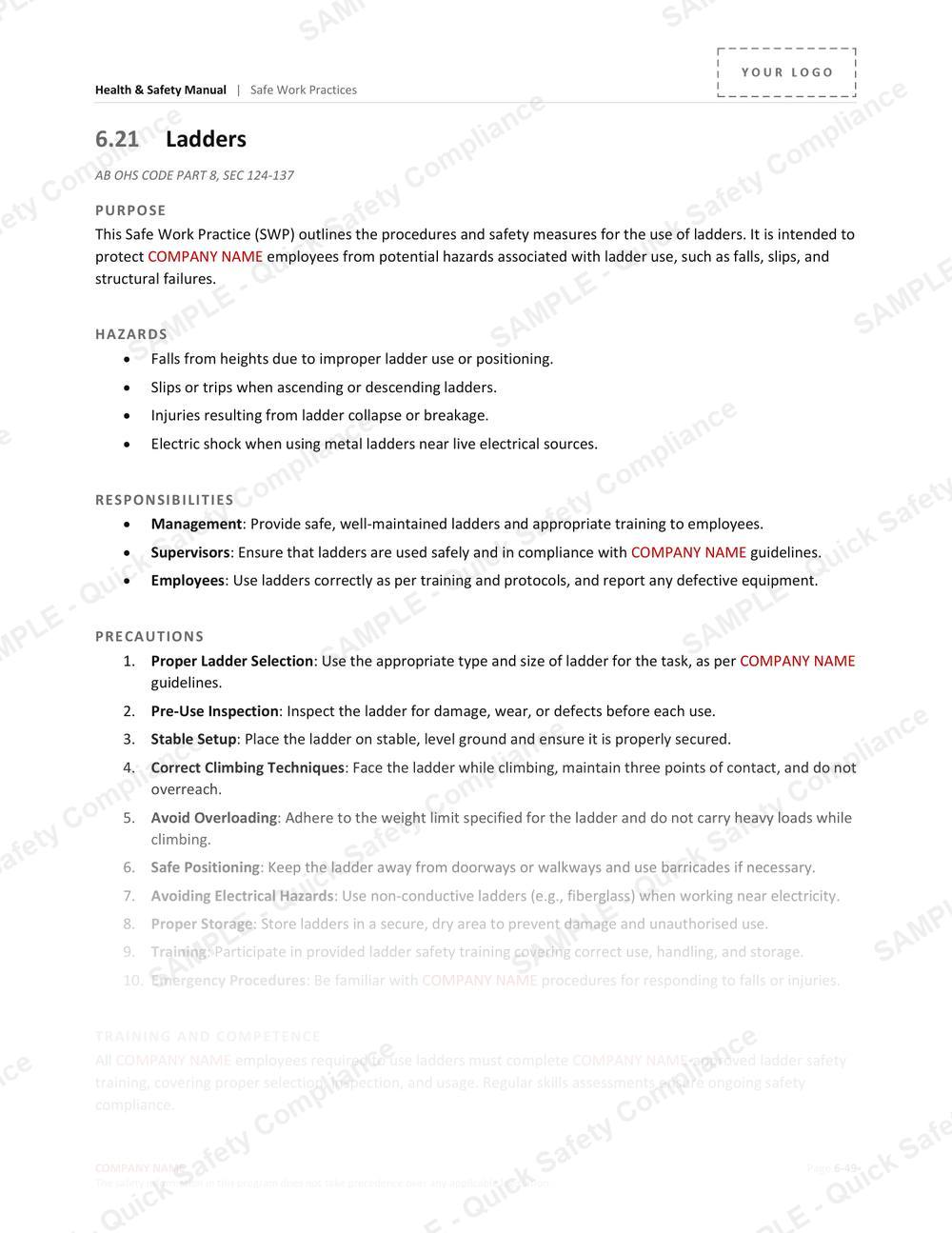
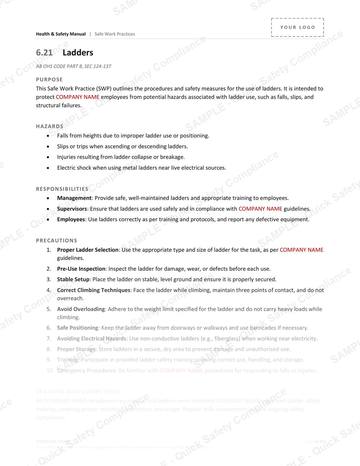 Ladders safe work practice, one of 39 in the manual
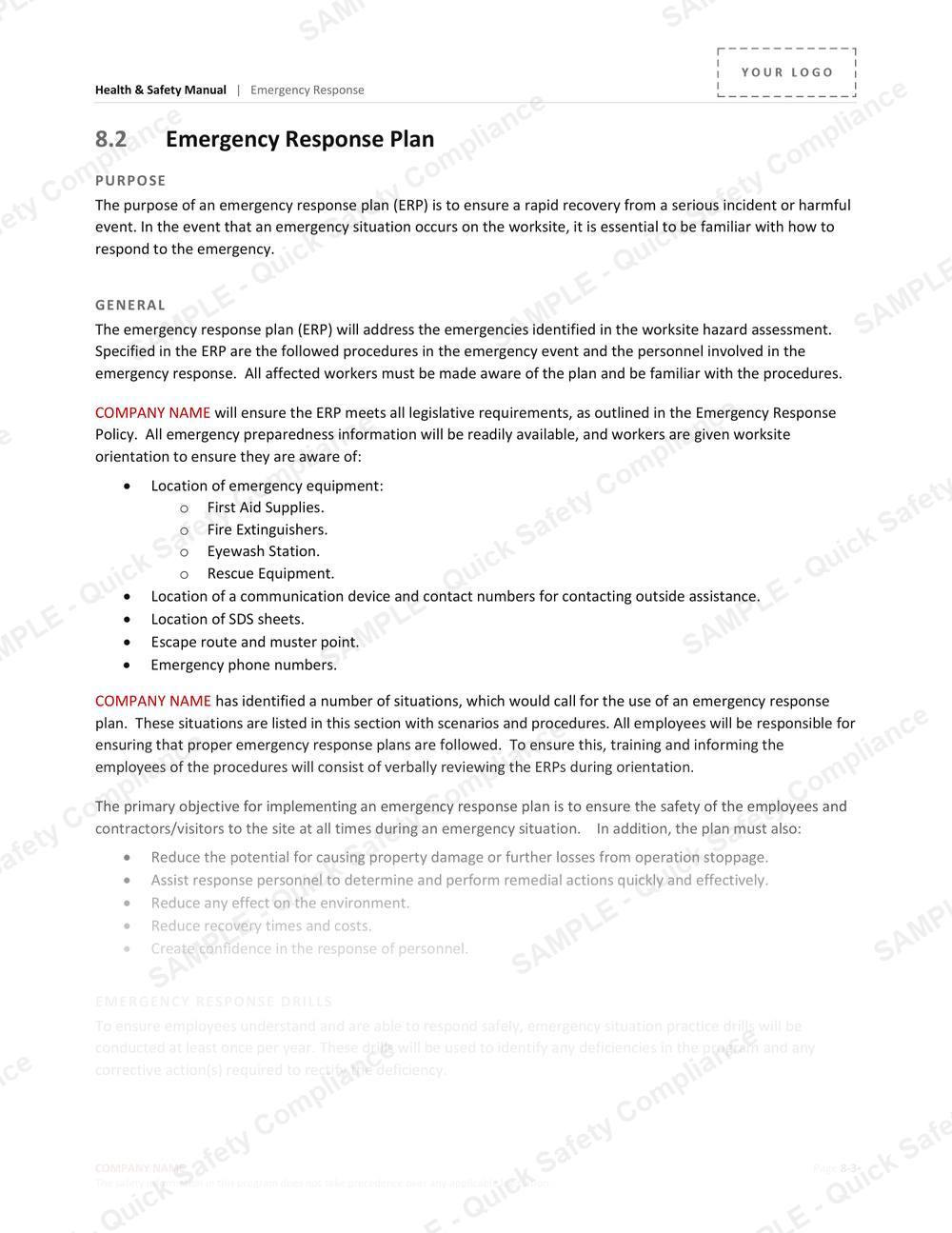
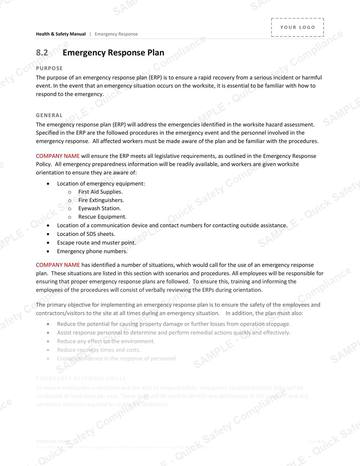 Emergency response plan: purpose, general requirements and response drills
The forms your crew fills in every day
Fillable PDF forms in their own folder: field level hazard assessments, inspections, incident investigation, orientation checklists and more. Our best-selling editions include 35 to 45 forms. Type into the fields, then print or save.
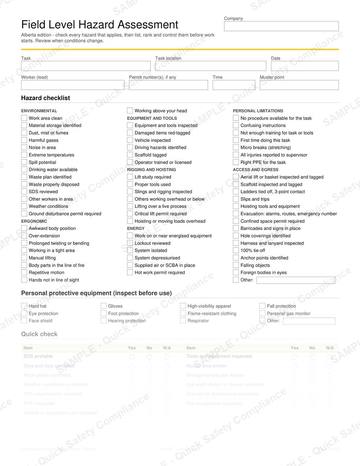 Field level hazard assessment (FLHA), fillable PDF form
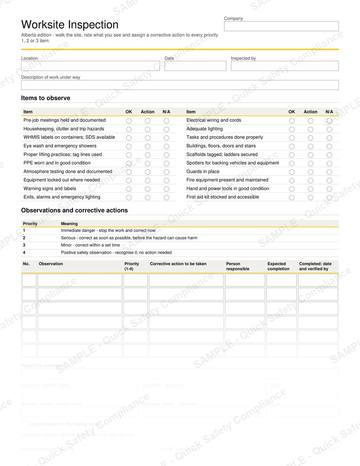 Worksite inspection, fillable PDF form
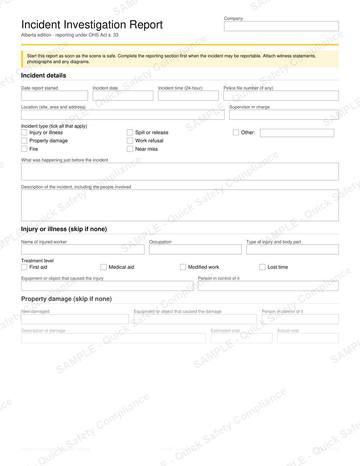 Incident investigation report, fillable PDF form
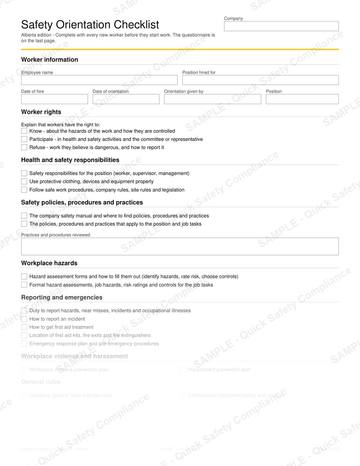 Safety orientation checklist, fillable PDF form
Eight tools to put the program to work, free with every manual
A manual on a shelf protects nobody. The kit walks you from download to a program your crew actually runs, with the sign-offs and records to show for it.
- 01Quick-Start GuideTwo pages that take you from download to a working program in five steps: personalise, review, sign, roll out and keep records, with a checklist that shows when you are done.
- 0230/60/90-Day Implementation ChecklistA tick-box plan for your first three months: set up and commit, start the routines, then test and improve, with who does what, the evidence to keep and a sign-off for each phase.
- 03Policy Sign-Off SheetsManagement adoption and worker acknowledgement sheets for 23 core policies matched to the manual, 17 optional sheets and a summary log, so every signature is on file.
- 0412-Month Safety CalendarYour safety year planned out: recurring routines, drills, reviews and equipment checks month by month, a reusable month page and the annual program review checklist.
- 05Audit-Readiness Self-CheckScore your program Yes, Partly or No across seven elements, see the evidence to have on file, then turn the gaps into an action plan before a client or auditor asks.
- 06Workplace PostersReady-to-post text for four workplace posters: Health and Safety Policy, Emergency Contacts, Right to Refuse Unsafe Work and Working Alone Check-In.
- 07Worker Orientation Checklist and 30-Day Check-InA six-part orientation checklist with worker initials and sign-off, plus a 30-day check-in guide so new workers are followed up, not forgotten.
- 08Record-Keeping GuideWhat to keep, for how long and where: records by type with suggested minimum retention, a folder structure, file naming and a monthly records check.
52 toolbox talks for your trade, one for every week
Short, ready-to-read talks in week order, planned around the seasons, so your crew meetings never start from a blank page. Every manual includes the pack for its trade.
Construction Toolbox Talks52 talks. With: Construction, Glass and Window, Painting, Road Construction and Maintenance, Spray Foam
- Week 1 Starting the Year Safe: Hazard Reporting and Speaking Up
- Week 2 Cold Stress: Hypothermia and Frostbite
- Week 3 Slips, Trips and Falls on Ice and Snow
- Week 4 Carbon Monoxide and Temporary Heaters
- Week 5 Working in Short Daylight: Lighting and Visibility
- Week 6 Snow Removal and Snow Loads on Roofs and Structures
- Week 7 Fire Safety and Temporary Heat
- Week 8 Winter Driving to and on Site
- Week 9 Ladder Safety
- Week 10 Fall Protection Basics
- Week 11 Housekeeping on Site
- Week 12 Spring Thaw: Ground Conditions and Site Access
- Week 13 Trenching and Excavation Cave-ins
- Week 14 Ground Disturbance and Buried Utilities
- Week 15 Overhead Power Lines
- Week 16 Hand and Power Tool Safety
- Week 17 Wet Conditions, Flooding and Electrical Hazards
- Week 18 Scaffold Safety
- Week 19 Mobile Equipment and Blind Spots
- Week 20 Traffic Control and Working Near Roads
- Week 21 Ticks, Mosquitoes and Stinging Insects
- Week 22 Wildlife Awareness
- Week 23 Hearing Protection
- Week 24 Eye and Face Protection
- Week 25 Heat Stress
- Week 26 Sun Exposure and Skin Protection
- Week 27 Thunderstorms and Lightning
- Week 28 Wildfire Smoke and Air Quality
- Week 29 Silica Dust
- Week 30 Hazardous Products and WHMIS
- Week 31 Young and New Workers
- Week 32 Hot Work and Fire Watch
- Week 33 Confined Spaces
- Week 34 Lockout and Energy Control
- Week 35 Cranes, Rigging and Suspended Loads
- Week 36 Working Alone
- Week 37 Manual Handling and Back Injuries
- Week 38 Elevated Work Platforms and Aerial Lifts
- Week 39 Struck-by Hazards: Falling Objects and Head Protection
- Week 40 Fatigue and Long Shifts
- Week 41 Shorter Days and High-Visibility Clothing
- Week 42 Fall Wildlife and Hunting Season
- Week 43 Fall Weather: Wind, Rain, Frost and Wet Leaves
- Week 44 Preparing the Site for Winter
- Week 45 Near-Miss and Incident Reporting
- Week 46 Impairment: Alcohol, Cannabis and Medication
- Week 47 Emergency Response and First Aid on Site
- Week 48 Electrical Safety: Cords, GFCIs and Temporary Power
- Week 49 Mental Health and Stress
- Week 50 Holiday Season Distractions and Rushing
- Week 51 Your Rights and Responsibilities
- Week 52 Looking Back on the Year and Planning Ahead
Electrical Toolbox Talks52 talks. With: Electrical
- Week 1 Starting the Year Right: Stop Work Authority and Speaking Up
- Week 2 Cold Stress: Hypothermia and Frostbite
- Week 3 Slips, Trips and Falls on Ice and Snow
- Week 4 Carbon Monoxide and Temporary Heaters
- Week 5 Lockout and Isolation of Electrical Energy
- Week 6 Test Before You Touch: Verifying Absence of Voltage
- Week 7 Arc Flash: Understanding the Hazard
- Week 8 Short Daylight: Temporary Lighting and Working in the Dark
- Week 9 Winter Driving to Job Sites
- Week 10 Cold Weather and Your Electrical PPE and Tools
- Week 11 Outdoor Electrical Equipment in Winter: Snow, Ice and Moisture
- Week 12 Spring Thaw: Water, Mud and Electricity
- Week 13 Choosing the Right Ladder for Electrical Work
- Week 14 Setting Up and Using Ladders Safely
- Week 15 Extension Cords and Ground Fault Protection
- Week 16 Overhead Power Lines
- Week 17 Underground Utilities and Locates
- Week 18 Trenching for Conduit and Cable
- Week 19 Rubber Insulating Gloves: Inspection and Care
- Week 20 Ticks and Biting Insects
- Week 21 Wildlife Awareness on Rural and Remote Sites
- Week 22 Mobile Elevating Work Platforms
- Week 23 Fall Protection Basics
- Week 24 Hand and Power Tool Safety
- Week 25 Heat Stress: Recognising the Warning Signs
- Week 26 Hydration and Heat Acclimatisation
- Week 27 Sun and UV Exposure
- Week 28 Lightning and Summer Storms
- Week 29 Wildfire Smoke
- Week 30 Hot Attics, Crawl Spaces and Ceiling Spaces
- Week 31 Confined Spaces: Vaults, Manholes and Electrical Rooms
- Week 32 Solar Photovoltaic Systems
- Week 33 Batteries and Energy Storage Systems
- Week 34 Portable Generators and Backfeed
- Week 35 Rooftop Work: Edges, Openings and Skylights
- Week 36 Eye and Face Protection
- Week 37 Housekeeping and Cable Management
- Week 38 Fatigue
- Week 39 Manual Handling: Reels, Conduit and Heavy Equipment
- Week 40 Energised Work: When Is It Justified?
- Week 41 Approach Boundaries and Qualified Workers
- Week 42 Shrinking Daylight: Visibility on Sites and Roads
- Week 43 Wildlife on the Road
- Week 44 Wind Storms and Downed Lines
- Week 45 Field Level Hazard Assessments
- Week 46 Older Buildings: Asbestos, Lead and Hidden Hazards
- Week 47 Silica Dust from Drilling and Coring
- Week 48 Getting Vehicles and Equipment Ready for Winter
- Week 49 Working Alone
- Week 50 The Holiday Rush: Distractions and Seasonal Lighting Work
- Week 51 Electrical Shock: Emergency Response
- Week 52 Looking Back on the Year and Planning Ahead
Toolbox Talks: General Workplace (All Industries)52 talks. With: General Industry, Health and Medical, Manufacturing, Office, Retail, Warehouse, Collision and Repair, Forestry, Forestry Supervision, Pest Control, Septic Trucking, Waste Management
- Week 1 A Fresh Start: Spotting and Reporting Hazards
- Week 2 Cold Stress and Frostbite
- Week 3 Slips, Trips and Falls on Ice and Snow
- Week 4 Winter Driving
- Week 5 Carbon Monoxide and Temporary Heaters
- Week 6 Snow Clearing and Safe Shovelling
- Week 7 Your Three Basic Rights
- Week 8 WHMIS: Reading Labels and Safety Data Sheets
- Week 9 Mental Health and Winter Stress
- Week 10 Time Change and Fatigue
- Week 11 Spring Thaw Hazards
- Week 12 Ladder Safety
- Week 13 Working at Heights: Fall Protection Basics
- Week 14 Housekeeping
- Week 15 Hand and Power Tool Safety
- Week 16 Personal Protective Equipment
- Week 17 Eye Protection
- Week 18 Noise and Hearing Protection
- Week 19 Emergency Response and Evacuation
- Week 20 Ticks and Biting Insects
- Week 21 Safe Lifting and Back Care
- Week 22 Distracted Driving and Road Work Zones
- Week 23 Sun Safety and UV Exposure
- Week 24 Heat Stress and Hydration
- Week 25 Wildlife Encounters
- Week 26 Lightning and Severe Storms
- Week 27 Wildfire Smoke and Air Quality
- Week 28 Young and New Workers
- Week 29 Working Alone
- Week 30 Electrical Safety
- Week 31 Controlling Hazardous Energy: Lockout
- Week 32 Machine Guarding
- Week 33 Backing Up and Using Spotters
- Week 34 Workplace Violence and Harassment
- Week 35 Fire Prevention and Fire Extinguishers
- Week 36 Incident and Near-Miss Reporting
- Week 37 First Aid: Know Before You Need It
- Week 38 Confined Space Awareness
- Week 39 Hazard Assessments Before Every Task
- Week 40 Shorter Days: Working in Low Light
- Week 41 Rain, Wet Leaves and Fall Slips
- Week 42 Fatigue and Shift Work
- Week 43 Impairment at Work
- Week 44 Wildlife on the Road
- Week 45 Getting Vehicles and Equipment Ready for Winter
- Week 46 Dust and Respiratory Protection
- Week 47 Compressed Gas Cylinders
- Week 48 Ergonomics and Repetitive Strain
- Week 49 Dressing for the Cold
- Week 50 Holiday Season: Staying Focused
- Week 51 Extension Cords and Temporary Heat
- Week 52 Year in Review: Lessons Learned
Landscaping and Snow Removal Toolbox Talks52 talks. With: Golf Course, Arborist, Snow Removal and Landscaping
- Week 1 Starting the Year Right: Hazard Reporting and Speaking Up
- Week 2 Cold Stress: Hypothermia and Frostbite
- Week 3 Slips, Trips and Falls on Ice
- Week 4 Plow Truck Pre-Trip Inspection
- Week 5 Operating Snowblowers Safely
- Week 6 Shovelling and Manual Snow Removal
- Week 7 Night Work and Low Visibility
- Week 8 Fatigue and Long Storm Shifts
- Week 9 Roof Snow Removal and Fall Hazards
- Week 10 De-icing Salt and Chemical Handling
- Week 11 Skid Steers and Loaders Around People
- Week 12 Carbon Monoxide in Vehicles and Enclosed Spaces
- Week 13 Working Near Traffic in Lots and Roadways
- Week 14 Seasonal Changeover: Removing Plows and Locking Out Equipment
- Week 15 Lifting and Carrying Landscape Materials
- Week 16 Hand Tools: Shovels, Rakes, Pruners and Saws
- Week 17 Walk-Behind Mower Safety
- Week 18 Ride-On and Zero-Turn Mowers: Rollovers and Slopes
- Week 19 Digging Safely: Underground Utilities
- Week 20 Pesticides and Fertilisers
- Week 21 Noise and Hearing Protection
- Week 22 String Trimmers and Flying Debris
- Week 23 Chainsaw Basics for Landscaping Crews
- Week 24 Ladders for Pruning, Gutters and Lighting
- Week 25 Trailers: Hitching and Securing Loads
- Week 26 Ticks and Insect-Borne Disease
- Week 27 Heat Stress: Recognising the Signs
- Week 28 Sun Exposure and UV Protection
- Week 29 Hydration and Work-Rest Cycles
- Week 30 Wildfire Smoke and Air Quality
- Week 31 Stinging Insects and Allergic Reactions
- Week 32 Poisonous Plants
- Week 33 Working Alone
- Week 34 Cutting Saws and Silica Dust
- Week 35 Excavations and Trench Edges
- Week 36 Overhead Power Lines
- Week 37 Irrigation Work: Water and Electricity
- Week 38 Fuelling Equipment Safely
- Week 39 Wildlife Encounters
- Week 40 Leaf Blowers and Fall Cleanup
- Week 41 Aerators, Dethatchers and Overseeding Equipment
- Week 42 Wet Leaves, Mud and Slippery Surfaces
- Week 43 Shorter Days: Visibility and Driving at Dusk
- Week 44 Getting Ready for Snow Season: Site Walk-Throughs
- Week 45 Installing Snow Stakes and Mounting Plows
- Week 46 Tree and Branch Removal: Falling Objects
- Week 47 Winterising and Storing Equipment
- Week 48 Mental Health and Seasonal Pressure
- Week 49 Your Rights: Know, Participate, Refuse
- Week 50 Emergency Response and Incident Reporting
- Week 51 Distraction and Phone Use Around Equipment
- Week 52 Year in Review: Near Misses and Lessons Learned
Oil and Gas Toolbox Talks52 talks. With: Oil and Gas
- Week 1 Starting the Year Right: Field Level Hazard Assessments
- Week 2 Cold Stress, Frostbite and Hypothermia
- Week 3 Winter Driving on Lease and Resource Roads
- Week 4 Slips, Trips and Falls on Ice and Snow
- Week 5 Thawing Frozen Lines and Equipment Safely
- Week 6 Carbon Monoxide from Heaters and Engines
- Week 7 Hydrogen Sulphide Awareness
- Week 8 Confined Space Entry
- Week 9 Working Alone in Remote Locations
- Week 10 Spring Break-Up and Soft Ground
- Week 11 Controlling Hazardous Energy and Lockout
- Week 12 Ground Disturbance and Buried Pipelines
- Week 13 Hand Safety and Pinch Points
- Week 14 Line of Fire
- Week 15 Rig Moves, Backing and Spotters
- Week 16 Overhead Power Lines
- Week 17 Fall Protection on Tanks, Rigs and Elevated Work
- Week 18 Static Electricity, Bonding and Grounding
- Week 19 Fatigue and Long Shifts
- Week 20 Wildlife Encounters and Bear Awareness
- Week 21 Wildfire Season and Hot Work Permits
- Week 22 Ticks, Mosquitoes and Biting Insects
- Week 23 Heat Stress
- Week 24 Sun Exposure and Hydration
- Week 25 Lightning and Severe Storms
- Week 26 Hot Work and Fire Watch
- Week 27 Gas Detection and Bump Testing
- Week 28 Rigging and Lifting
- Week 29 Cranes, Pickers and Suspended Loads
- Week 30 Trenching and Excavation
- Week 31 Housekeeping on the Lease
- Week 32 Inspecting and Caring for Your PPE
- Week 33 Noise and Hearing Protection
- Week 34 Naturally Occurring Radioactive Material
- Week 35 Benzene and Hydrocarbon Vapours
- Week 36 Shorter Days and Working in Low Light
- Week 37 Hunting Season Near Leases
- Week 38 Wildlife on the Road During Rut Season
- Week 39 Well Control Awareness
- Week 40 Chemical Handling, WHMIS and Safety Data Sheets
- Week 41 Emergency Response Plans and Muster Points
- Week 42 Reporting Incidents and Near Misses
- Week 43 Hand and Power Tools
- Week 44 Manual Handling and Preventing Back Injuries
- Week 45 Winterising Equipment and Vehicles
- Week 46 Ladders and Stairs
- Week 47 Journey Management
- Week 48 Pressure Testing
- Week 49 Dressing for the Cold and Flame-Resistant Layers
- Week 50 Distraction, Stress and Mental Health
- Week 51 Fire Prevention and Extinguishers
- Week 52 Stop Work Authority and the Right to Refuse
Toolbox Talks: Plumbing, Heating and HVAC52 talks. With: HVAC, Plumbing and Heating
- Week 1 Starting the Year Right: Hazard Assessment Before Every Call
- Week 2 Cold Stress and Frostbite
- Week 3 Slips, Trips and Falls on Ice and Snow
- Week 4 Winter Driving to Service Calls
- Week 5 Carbon Monoxide on No-Heat Calls
- Week 6 Thawing Frozen Pipes Safely
- Week 7 Temporary Heat on Construction Sites
- Week 8 Crawlspaces and Attics
- Week 9 Ladder Safety
- Week 10 Time Change and Fatigue
- Week 11 Spring Thaw: Flooded Basements and Sump Pumps
- Week 12 Excavation and Trench Safety
- Week 13 Locating Buried Utilities Before You Dig
- Week 14 Asbestos in Older Buildings
- Week 15 Mould and Water-Damaged Buildings
- Week 16 Sewage, Drains and Biological Hazards
- Week 17 Hot Work and Fire Watch
- Week 18 Lockout and Energy Isolation
- Week 19 Gas Piping and Leak Checks
- Week 20 Ticks, Stinging Insects and Wildlife
- Week 21 Compressed Gas Cylinders
- Week 22 Pressure Testing Safely
- Week 23 Heat Stress
- Week 24 Sun and UV Exposure
- Week 25 Rooftop Units and Fall Protection
- Week 26 Hot Attics and Mechanical Rooms
- Week 27 Thunderstorms and Lightning
- Week 28 Wildfire Smoke and Air Quality
- Week 29 Refrigerant Handling
- Week 30 Electrical Safety for HVAC and Plumbing Work
- Week 31 Manual Handling: Water Heaters, Furnaces and Heavy Equipment
- Week 32 Hoisting and Rigging HVAC Units
- Week 33 Hand and Power Tools
- Week 34 Cutting, Grinding and Eye and Face Protection
- Week 35 Silica Dust: Coring and Cutting Concrete
- Week 36 Back to School: Occupied Buildings and School Zones
- Week 37 Furnace Season Start-Up: Combustion and Venting
- Week 38 Boilers and Hydronic Systems
- Week 39 Water Heaters: Scalds, Relief Valves and Venting
- Week 40 Shorter Days: Low Light and Visibility
- Week 41 WHMIS: Chemicals in Our Trade
- Week 42 Solvent Cement, Primers and Flux
- Week 43 Confined Spaces
- Week 44 Hearing Protection
- Week 45 PPE Check: Is Your Gear Ready?
- Week 46 Working Alone
- Week 47 Scaffolds and Elevating Work Platforms
- Week 48 Housekeeping on Job Sites and in Homes
- Week 49 Holiday Rush, Fatigue and Impairment
- Week 50 Emergency Response and First Aid
- Week 51 Incident and Near Miss Reporting
- Week 52 Looking Back and Looking Ahead: Your Rights and Responsibilities
Your company name and logo, placed for you
After checkout you can skip the editing: tell us your company name, upload your logo and download a personalised Word file with both already in place. It is free with every manual.
- Enter your company nameExactly as it should read. It replaces every COMPANY NAME in the manual and prints in every page footer.
- Upload your logoA PNG, JPG or SVG file (a transparent PNG looks best). It is fitted to the cover and the page header without stretching.
- Download your personalised Word fileReady in moments, and kept in your account with your other files.
- Open it in Word and click YesWord asks whether to update the fields in the document. Click Yes: the table of contents refreshes so every page number matches your branded file.
Prefer to do it yourself? Three steps in Word
- Step 1
Add your logo
Replace the "your logo here" image on the cover page and in the header, or delete it and type your company name.
- Step 2
Find and replace COMPANY NAME
One Find and Replace (match case, then set the font colour to black) puts your name everywhere it appears in the manual.
- Step 3
Update the contents
Right-click the table of contents and choose "Update entire table" so every page number is right.
Yours the minute you pay, and every time after
- Instant downloadYour .zip is ready on the order page the moment payment goes through, and the link is emailed to you as well.
- Unlimited re-downloadsSign in with a link sent to your email, no password, and download any file you have bought, as often as you need.
- Canadian dollars, paid onceCard payment at checkout, tax added there. No subscription and nothing to renew.
- 30-day contents promiseIf a file does not match the contents shown on its page, email us within 30 days for a full refund. Refund policy
- Help when you need itEmail info@quicksafetycompliance.com or use the contact form.
Setup questions
What file types do I get?
The manual is a Microsoft Word .docx you can edit freely. The forms are fillable PDFs you type into, print or save. The Implementation Kit and toolbox talks are ready-to-print documents. Everything comes in one .zip file.
Do I need special software?
Microsoft Word (desktop) for the manual, so the table of contents and headers work as designed, and any PDF reader that fills forms, such as the free Adobe Acrobat Reader.
What happens when Word asks to update fields?
Click Yes. When you open a file from the brand-it step, Word asks whether to update the fields in the document. Yes refreshes the table of contents so every page number matches your branded file.
Can I re-download my files later?
Yes. Sign in with your email (we send you a sign-in link, no password) and every file you have bought is there, as often as you need it.
How does the Implementation Kit help me get audit-ready?
The Audit-Readiness Self-Check scores your program across seven elements and lists the evidence to keep on file, so you find and close the gaps before anyone else does. The 30/60/90-day checklist and sign-off sheets build that evidence as you roll the program out.
Get your safety program today. Download in minutes.
120 manuals for your province and trade, $499 paid once, with the Implementation Kit and 52 toolbox talks included.