What auditors look for in a written safety program
Whether the auditor works for a client, a prequalification platform or a certifying partner, they check two things: that your written program covers each element of a health and safety program, and that your records, your workers and your sites show the program is actually followed. They read the manual, compare it with your records, interview workers and supervisors, and look at the work. A common gap is not a missing section but a program that says one thing while the records show another.
By Quick Safety Compliance · · 4 min read
How an audit gathers evidence
A program scores well when all three line up. A strong manual with thin records, or records that workers cannot explain, scores poorly. A certifying partner's audit for a safety certificate follows its own protocol and scoring, and the certificate comes from that partner, not from the manual.
- Documents: the written program and the records it calls for.
- Interviews: workers and supervisors are asked what the program says about their work, and whether it happens.
- Observation: the auditor looks at sites and equipment to see whether the controls in the program are in place.
Management commitment
- A signed and dated health and safety policy, reviewed at least yearly.
- Responsibilities written for each level, and people who can describe theirs.
- Evidence that managers take part: site visits, meeting attendance, follow-up on corrective actions.
- Resources: the PPE, equipment and time the program promises.
Hazard assessment and control
- Formal hazard assessments that match the work being done now, dated, with worker participation recorded.
- Field level hazard assessments completed before the work, signed and reviewed.
- Controls chosen in order (elimination, engineering, administrative, then PPE), and safe work practices for the hazards found.
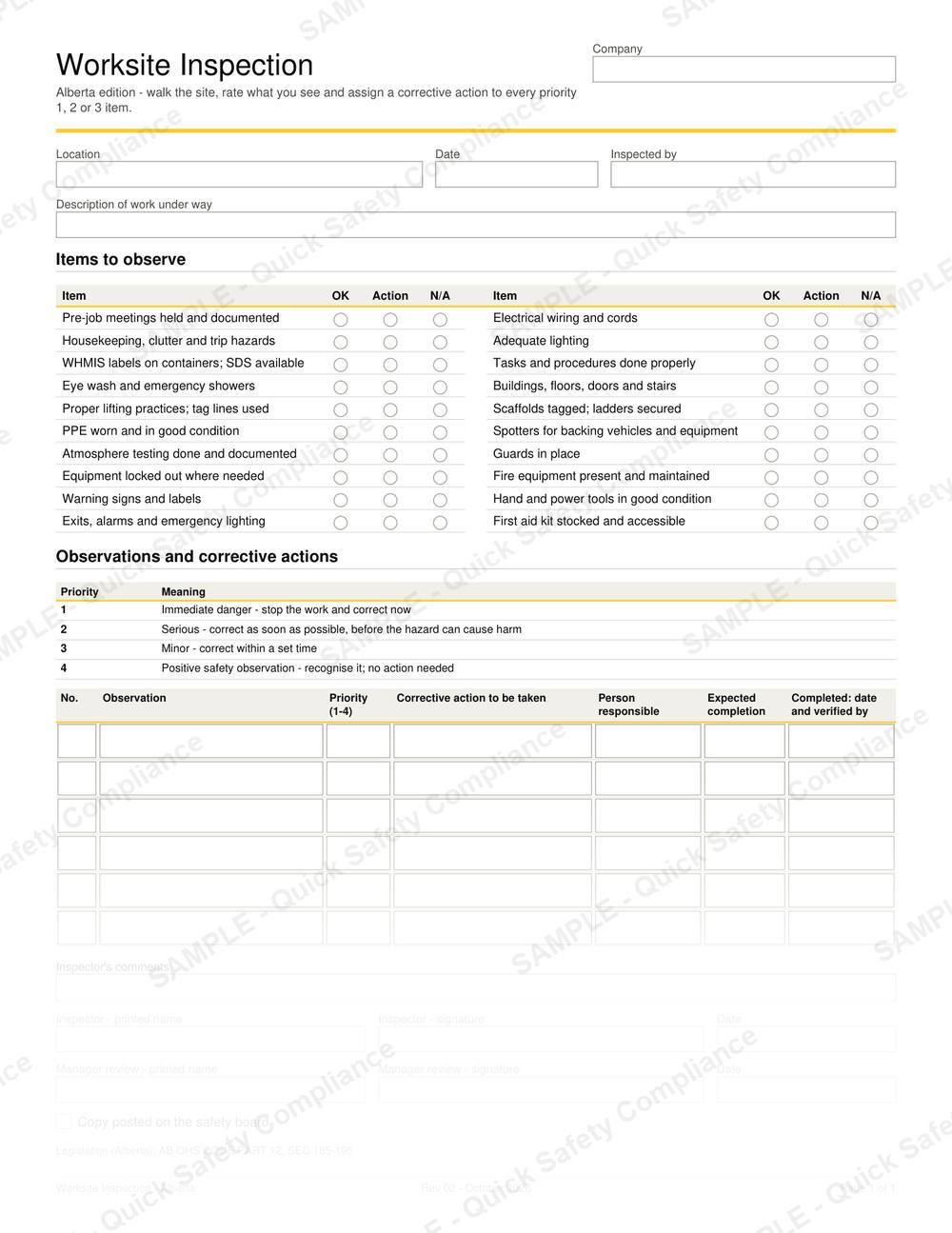
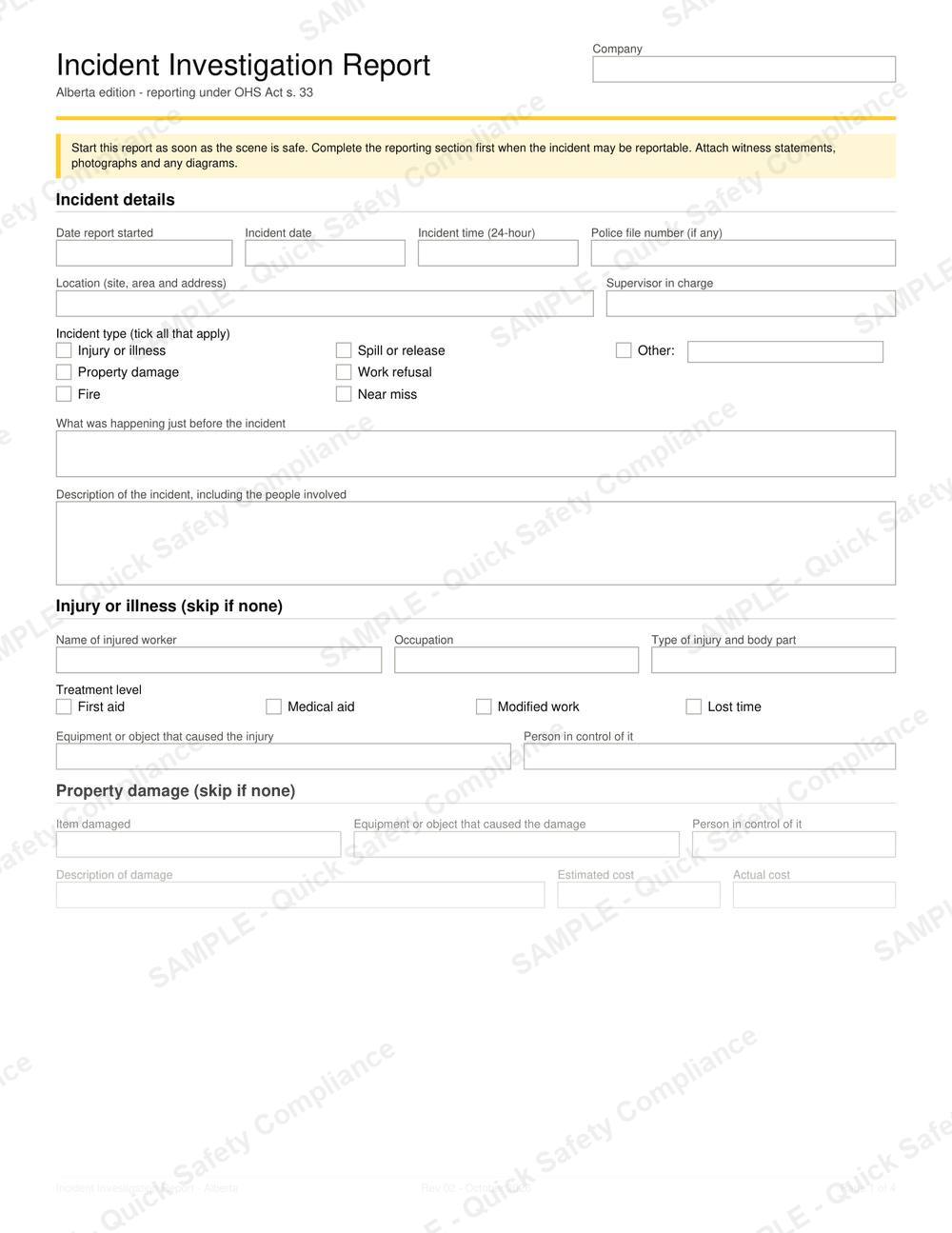
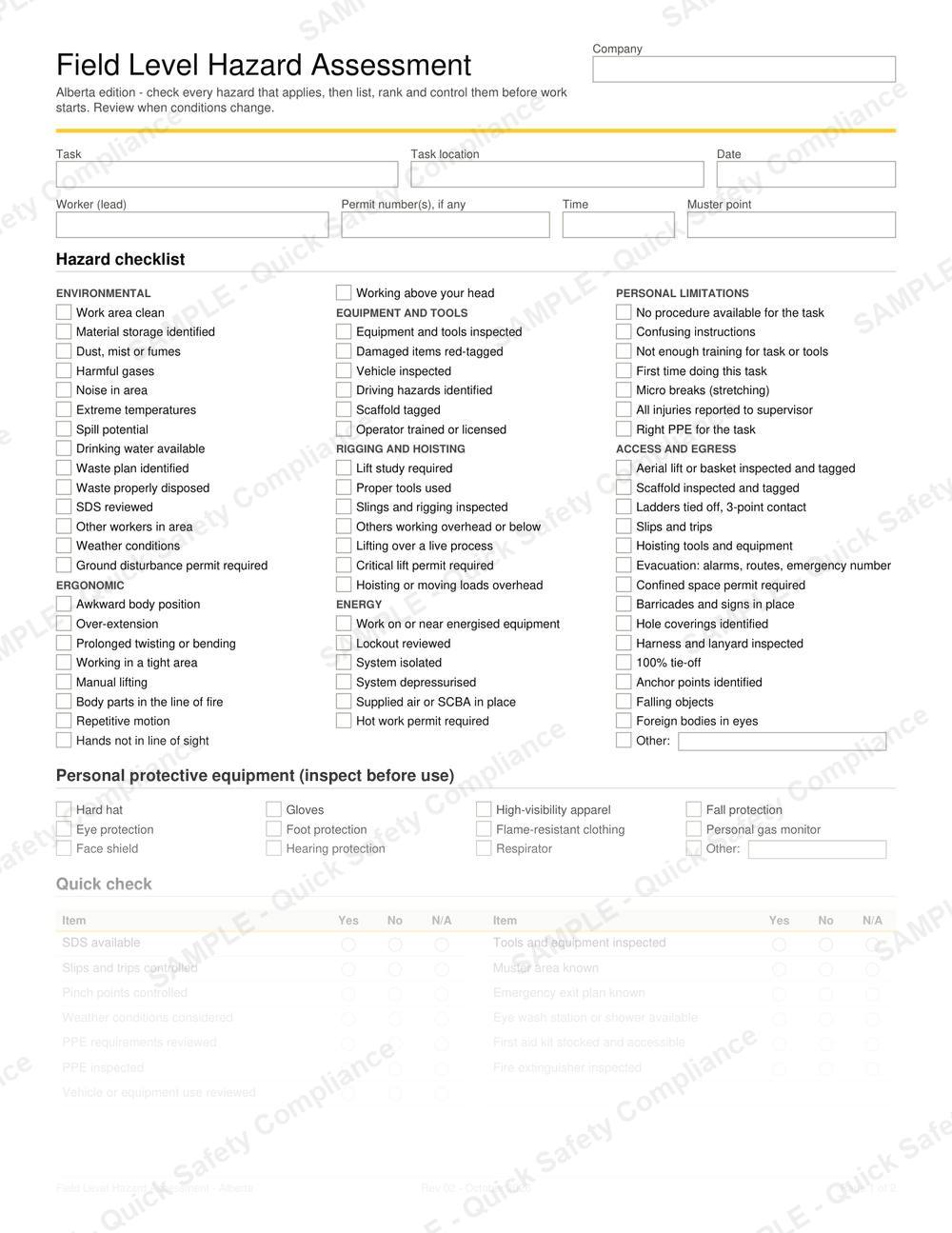
Real pages from the files you download. Tap a page to see it full size. From: Alberta Construction Safety Manual.
Inspections, training and competency
- Inspections done at the frequency the program sets, with deficiencies assigned, dated and closed.
- Orientation records for every worker, including subcontractors where the program says so.
- Training and certification records that match the high-risk work being done, with expiry dates tracked.
- Competency checks signed by a supervisor for the tasks each worker does.
Emergencies, incidents and administration
- Emergency response plans for each site, and records of drills with lessons learned.
- First aid arrangements that match the site and the head count.
- Incident and near miss reports, investigations that find causes, and corrective actions that were completed.
- Committee or representative records that match your head count and province.
- An annual program review with goals, and records kept for the periods the law requires.
What workers are asked
Interviews are short and practical. Expect questions such as: what are the main hazards of your job and how are they controlled; when did you last complete a hazard assessment; what would you do in an emergency here, and where is the muster point; how do you report a near miss; have you ever refused unsafe work, and what happened; when was your last toolbox talk and what was it about. Answers that match the program count for more than any document.
Prepare the week before
- Pull a sample of each record type for the last year and check it is complete, signed and dated.
- Close or update every open corrective action.
- Check that the legislation references and contact numbers in the manual are current.
- Make sure each site has its emergency plan posted and its first aid kit checked.
- Remind supervisors where the records are kept, so nobody has to hunt for them.
Common gaps auditors find
- The manual says weekly inspections; the records show one a month.
- Responsibilities name roles that do not exist in the company.
- Safe work practices for work the company never does, and none for work it does every day.
- Legislation references that are out of date or from another province.
- Corrective actions recorded but never closed.
- Workers who have never seen the manual.
Check yourself first
The Audit-Readiness Self-Check in the Implementation Kit scores your program Yes, Partly or No across seven elements, lists the evidence to have on file, and turns the gaps into an action plan. It is a self-check to find gaps before a client or auditor does, not an audit or a certification. Every manual includes it, for $499.
The Implementation Kit: 8 tools included with every manual
Questions
Will a manual from this store pass an audit?
A manual gives you a complete written program to start from. An audit also checks your records, your sites and your people, so the result depends on how the program is put to work. Use the self-check and the 30/60/90-day plan in the kit to build those records.
How far back do auditors look at records?
It depends on the audit protocol; many look at the most recent year. Keep records at least as long as your province requires, and use the Record-Keeping Guide in the kit for everything else.
Is a client audit the same as a certification audit?
No. A client or prequalification audit checks your program against that client's requirements. A certification audit follows the certifying partner's own protocol and scoring, usually over documents, interviews and site observation, and only the certifying partner can issue the certificate. The same records serve both.
Do auditors interview workers?
Usually, yes. Workers are asked about hazards, procedures, their rights and emergency plans, so orientation and toolbox talks matter as much as the paperwork.
Get the document today
See every section before you pay, download it in minutes and make it yours with your company name and logo.