How to roll out a safety manual in 30 days
You can take a safety manual from download to a working program in 30 days if you work in four one-week steps: in week 1, make it yours and sign it; in week 2, orient every worker and post the policy; in week 3, start the routines the manual describes; in week 4, test the program with a drill and a self-check and fix what you find. By day 30 you have a signed program and the first month of records behind it, which is what a client or auditor asks for. Every manual from this store includes an Implementation Kit built around this sequence.
By Quick Safety Compliance · · 4 min read
Before day 1
Name one person to lead the roll-out and give them time to do it. Pick the date you will start, tell your supervisors, and book a short meeting with each crew in week 2. If a client deadline is driving the roll-out, work back from it.
Gather what you will need in week 1 so it does not hold you up: your legal company name and logo, a list of roles and who fills them, the work you do and the equipment you use, emergency contacts and the address of each regular work location, and anything a client has already said it expects to see.
Week 1: make it yours and sign it
- Add your company name and logo. The free brand-it step does this for you after purchase; otherwise use Find and Replace in Word.
- Set the responsibilities to the roles you really have, and name who does what.
- Remove safe work practices for work you never do, and refresh the table of contents.
- Fill in emergency contacts, muster points and first aid arrangements for each regular work location.
- Sign and date the health and safety policy, and record management's adoption of each policy on the Policy Sign-Off Sheets.
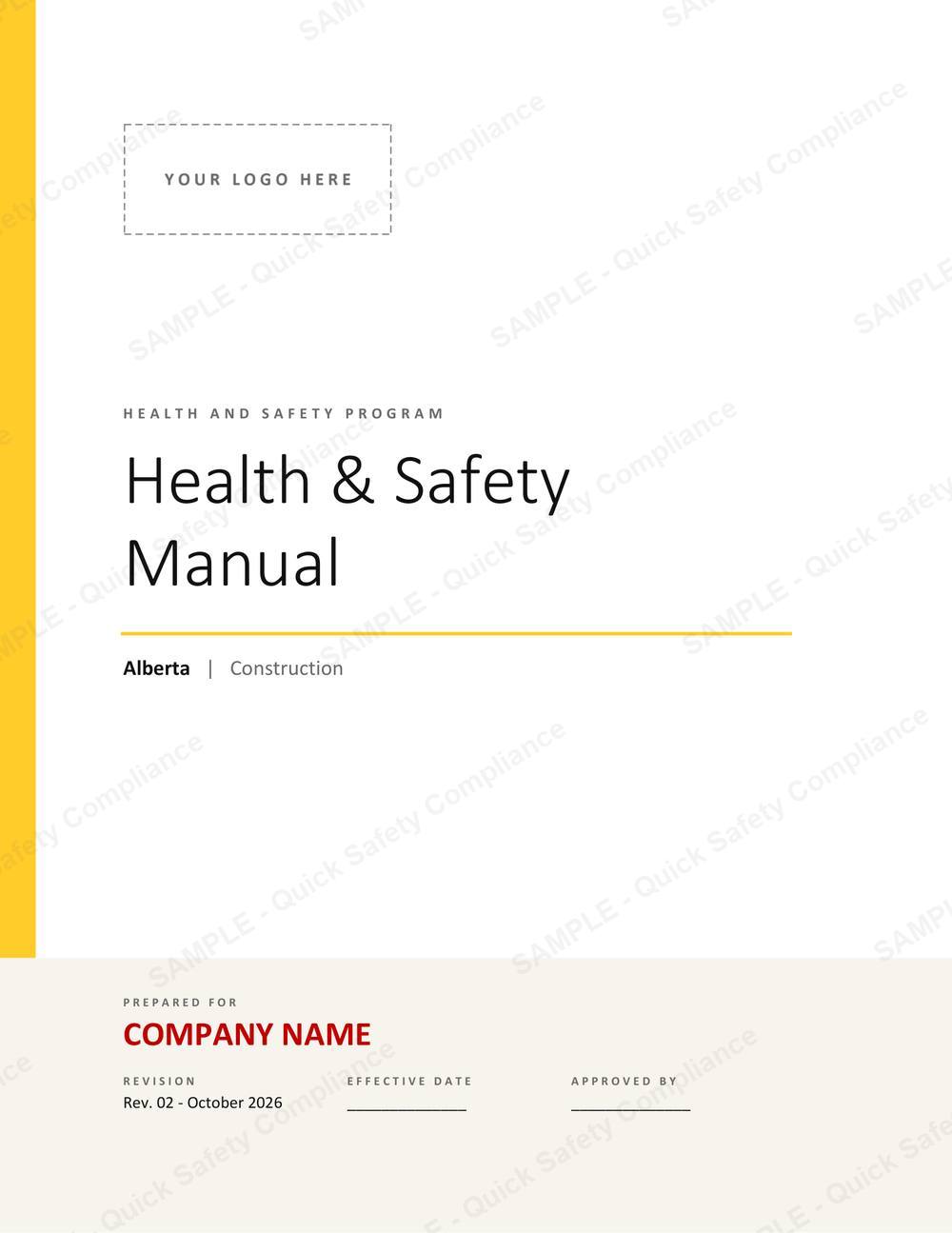
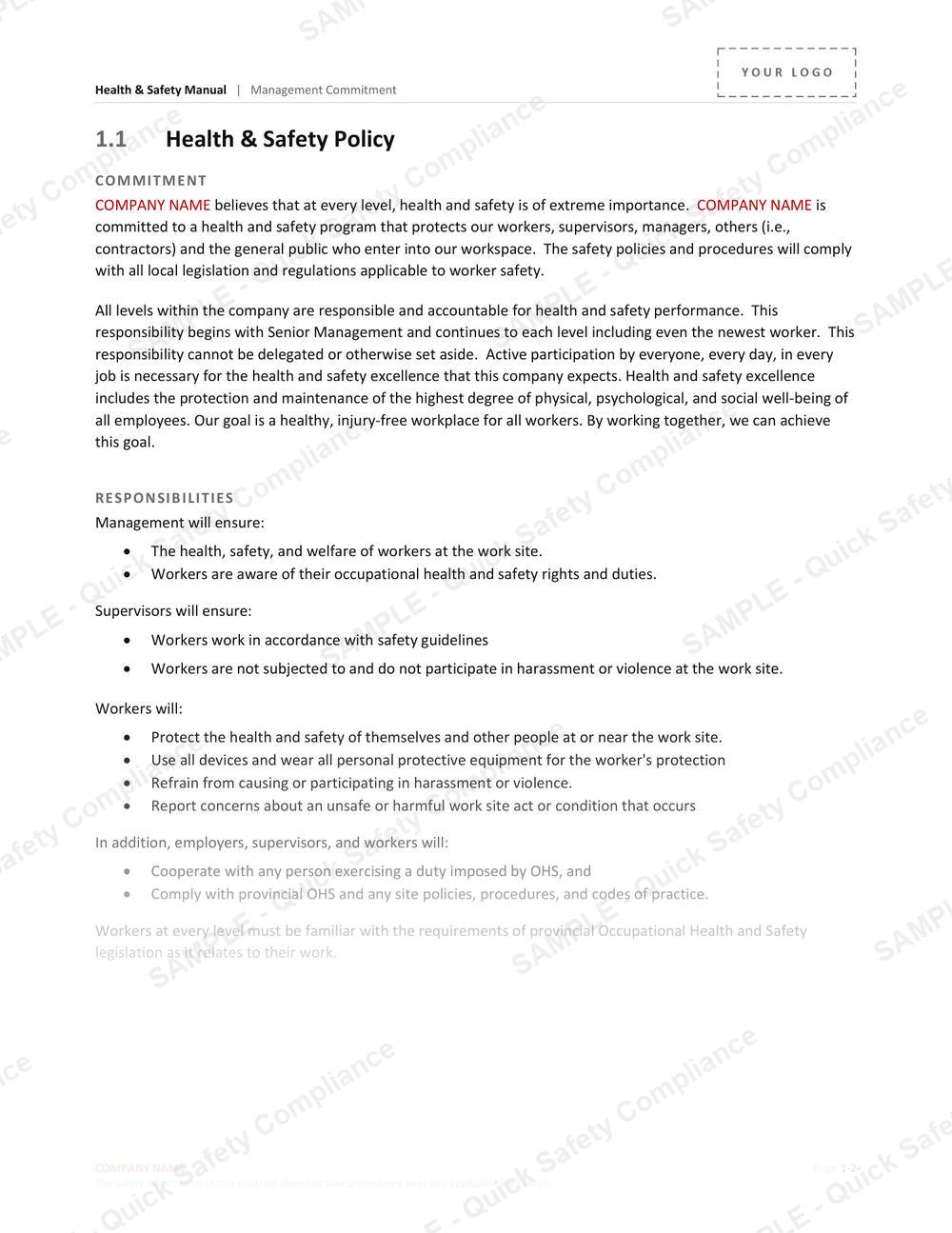
Real pages from the files you download. Tap a page to see it full size. From: Alberta Construction Safety Manual.
Week 2: orient everyone
- Walk each worker through the program with the Worker Orientation Checklist and 30-Day Check-In: their rights, how to report hazards and incidents, emergency procedures, PPE and the safe work practices for their tasks.
- Have every worker sign the policy acknowledgement sheets.
- Post the health and safety policy, emergency contacts and the right to refuse poster, using the text in the Workplace Posters.
- If you need a committee or a representative for your head count, set it up now and hold the first meeting.
Week 3: start the routines
- Hazard assessments: complete the formal assessments for your main types of work, and start field level hazard assessments at the start of each shift or task.
- Toolbox talks: hold the first weekly talk. Every manual includes 52 talks for its trade, one for each week of the year.
- Inspections: do the first site or shop inspection on the schedule the manual sets, and start a corrective action list.
- Records: file every completed form in one place from day one.
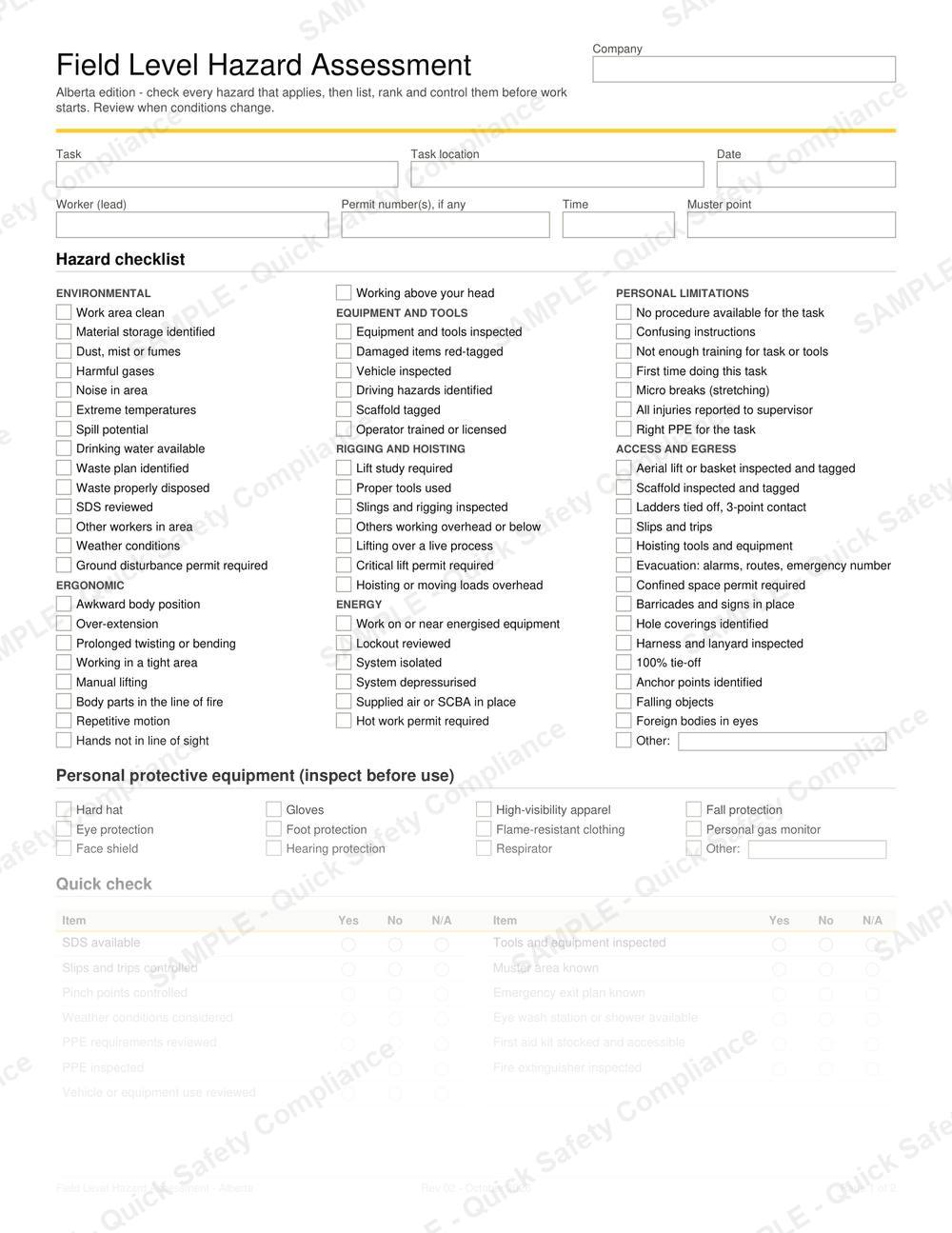
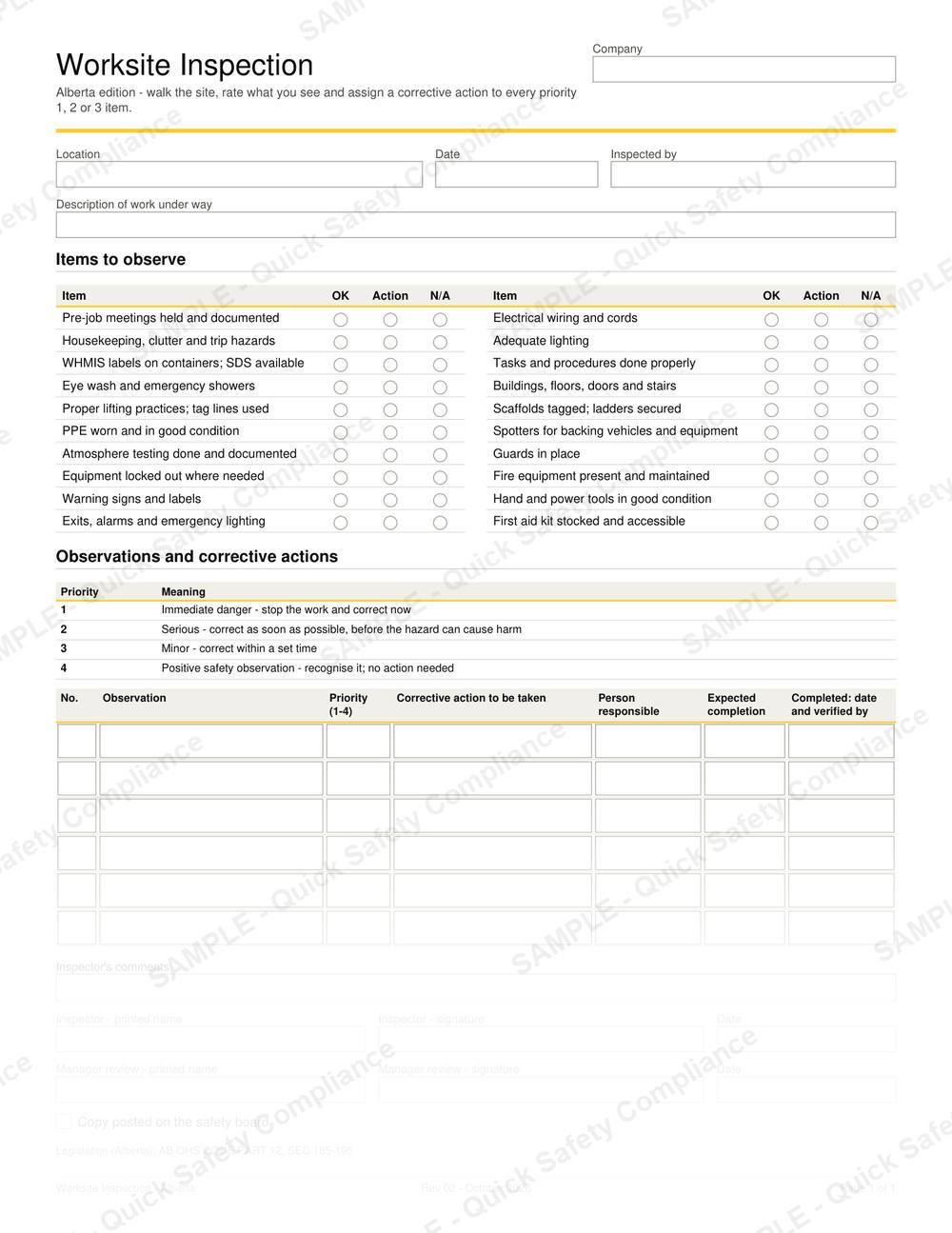
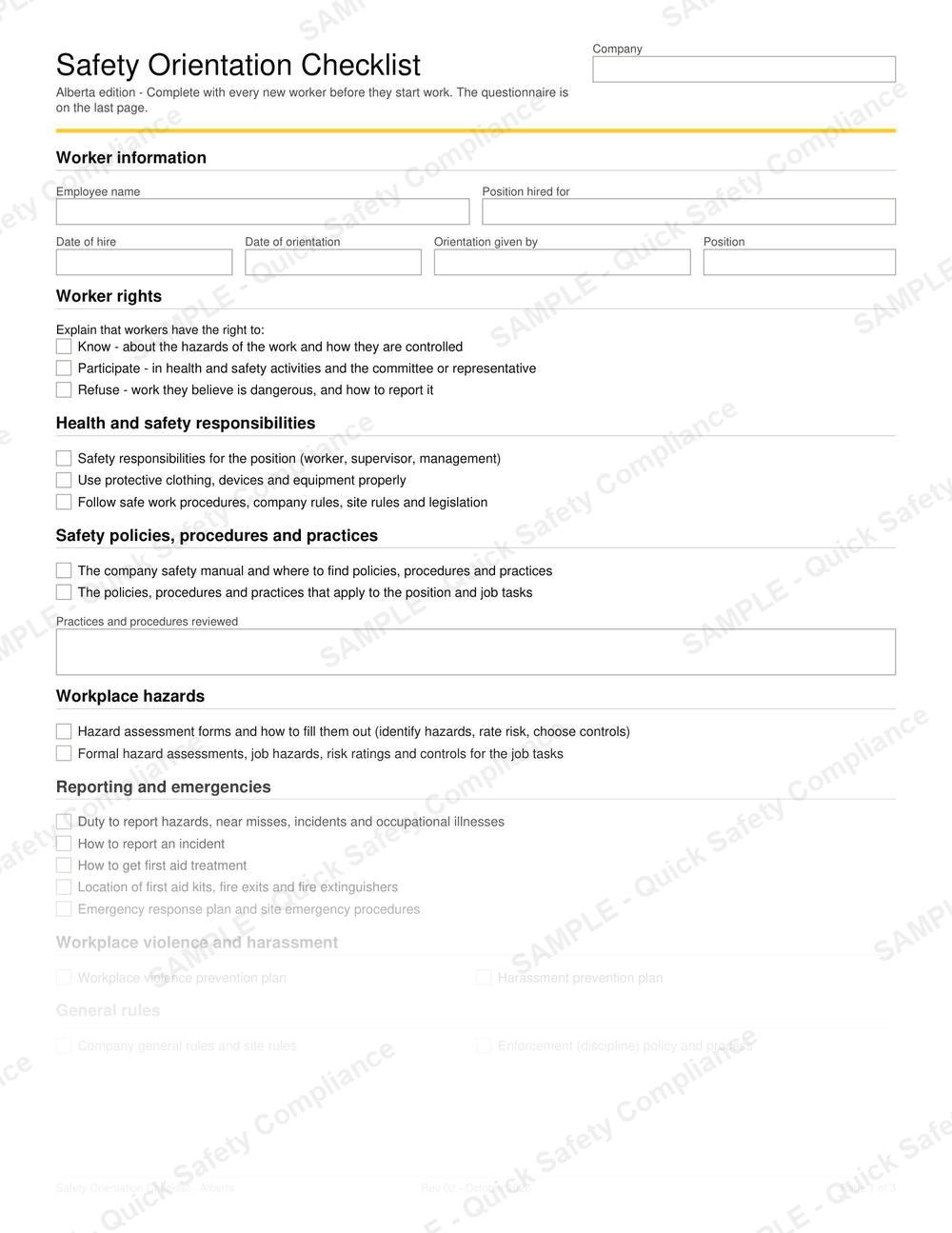
Real pages from the files you download. Tap a page to see it full size. From: Alberta Construction Safety Manual.
Week 4: test and fix
- Run an emergency drill and record what happened and what you will change.
- Score the program with the Audit-Readiness Self-Check: Yes, Partly or No across seven elements, with the evidence to have on file.
- Fix the gaps you found and close the corrective actions from your first inspection.
- Put the year's routines in the 12-Month Safety Calendar so the program keeps running after day 30.
Why roll-outs stall
- Nobody owns it. Name one person and give them the time.
- The manual is edited forever. Make it accurate, sign it, and improve it at the annual program review.
- Supervisors are not brought in first. Walk them through the routines before the crews, because they will run them.
- Forms are filled in but left in trucks. Collect them weekly from day one.
- Orientation is squeezed into a single crowded meeting. Do it crew by crew, with the checklist, and sign each one off.
What you have on day 30
Keep going: the first 90 days post covers the next two months, when the routines become habits and the records start to show trends.
- A branded, signed program that matches your company.
- Signed orientation records and policy acknowledgements for every worker.
- Four weeks of hazard assessments, toolbox talk records and at least one inspection.
- A drill record and a completed self-check with an action plan.
Everything in the kit
Every manual ($499) includes the Implementation Kit, 8 tools that follow this plan:
The Implementation Kit: 8 tools included with every manual
Questions
Can I share the manual with a client before day 30?
Yes. Once it is branded and signed it is your written program. The rest of the month builds the records that show it is in use, which is usually the next thing a client asks for.
What if I have crews on several sites?
Orient each crew where it works, using the same checklist, and have each site supervisor run the routines. Collect the completed forms in one place each week.
Do I need a committee before I roll out?
Only if your head count and province require one, and then set it up during the roll-out rather than before. The committee or representative should take part in the first inspection and the drill.
Is 30 days realistic for a small company?
Yes for the steps above, if one person owns the roll-out. The longest step is usually orientation, because it needs time with every worker.
Get the document today
See every section before you pay, download it in minutes and make it yours with your company name and logo.