The safe work practices construction clients ask for
Construction clients and general contractors expect a written safe work practice for every high-risk task in your scope of work: typically working at heights, ladders, scaffolding, ground disturbance and excavation, hot work, lockout, powered mobile equipment, and hand and power tools, plus WHMIS and housekeeping on every site. Match the list to your actual scope, then show the practices are used through hazard assessments, toolbox talks and orientation records. A construction manual here includes 39 safe work practices; single practices are $9 each.
By Quick Safety Compliance · · 2 min read
Start from your scope of work
Read the scope in the bid and list every task with a serious hazard. Each one needs a safe work practice, and the client will notice a high-risk task in the scope with no practice behind it. Do not pad the list with work you will not do; it makes the package harder to read and easier to question.
Tasks that usually need a written practice
- Working at heights and fall protection.
- Ladders and scaffolding.
- Ground disturbance and excavation.
- Hot work: welding, cutting and grinding.
- Lockout of equipment and energy sources.
- Powered mobile equipment, forklifts and telehandlers.
- Hand and power tools.
- WHMIS and housekeeping, which apply on every site.
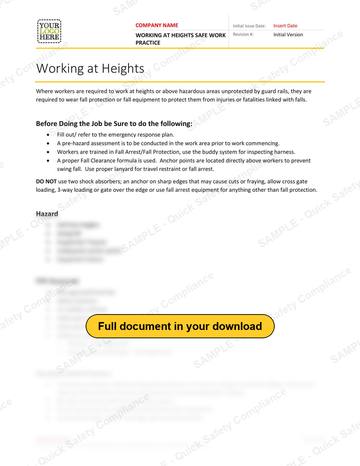
Working at Heights Safe Work Practice
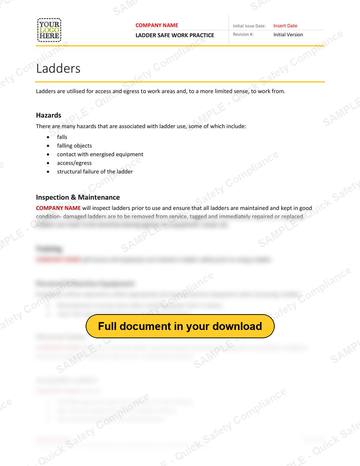
Ladder Safe Work Practice
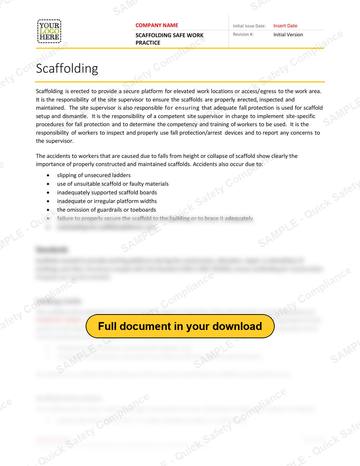
Scaffolding Safe Work Practice
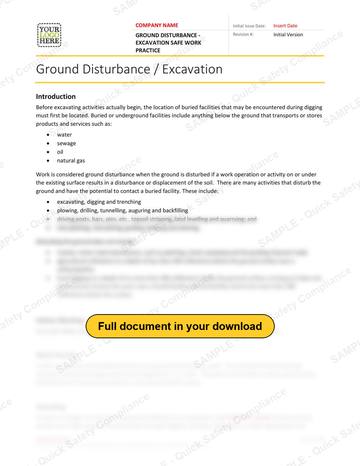
Ground Disturbance - Excavation Safe Work Practice
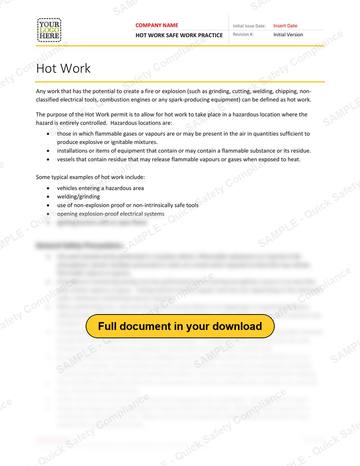
Hot Work Safe Work Practice
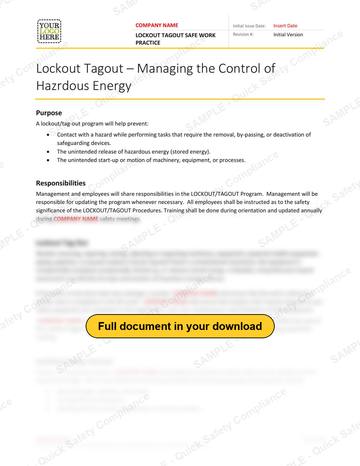
Lockout Tagout Safe Work Practice
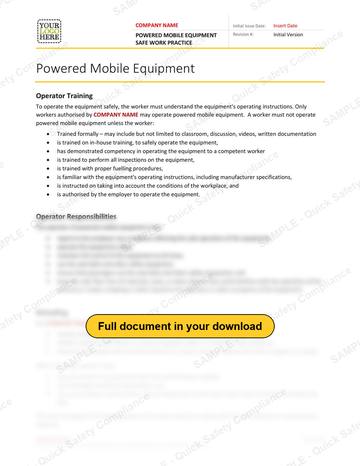
Powered Mobile Equipment Safe Work Practice
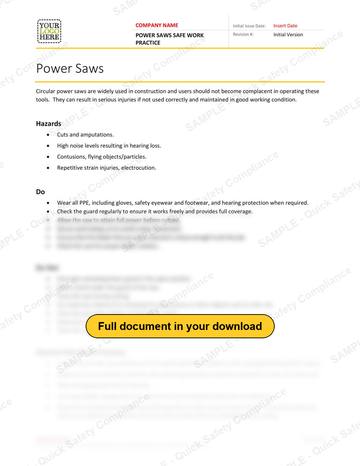
Power Saws Safe Work Practice
Show the practices are used
- Reference the relevant practice on each hazard assessment.
- Cover one practice in a toolbox talk and record who attended.
- Have workers sign that they have read the practices for their tasks during orientation.
- Note on inspection reports when a practice was not followed and what was done about it.
Single practices or the whole set
Questions
What is the difference between a safe work practice and a safe work procedure?
A practice states the general rules for doing a kind of work safely; a procedure gives the exact steps for one task. Many companies use the terms interchangeably, and clients usually accept either as long as it covers the hazards, controls and steps.
Can I edit the practices?
Yes. Each one is a Word document. Add your company name, change the equipment and roles to match yours, and keep the version date.
Get the document today
See every section before you pay, download it in minutes and make it yours with your company name and logo.