Ontario construction health and safety program: policy, program and project rules
In Ontario, an employer with more than 5 workers regularly employed must prepare a written occupational health and safety policy, review it at least once a year, set up and maintain a program to implement it (OHS Act, clause 25 (2) (j)), and post the policy in a conspicuous place at the workplace or in a readily accessible electronic format (clause 25 (2) (k)). On a construction project, the constructor, usually the general contractor, must ensure the Act and Ontario Regulation 213/91 (Construction Projects) are followed by every employer and worker on the project (s. 23). Here is what that means for a contractor writing or updating its program, with the sections behind each rule.
By Quick Safety Compliance · · 4 min read
The written policy and program
Clause 25 (2) (j) of the Occupational Health and Safety Act applies where more than 5 workers are regularly employed: prepare a written policy, review it at least annually, and set up and maintain a program to implement it. The policy is posted in a conspicuous place at the workplace, or in a readily accessible electronic format (clause 25 (2) (k)).
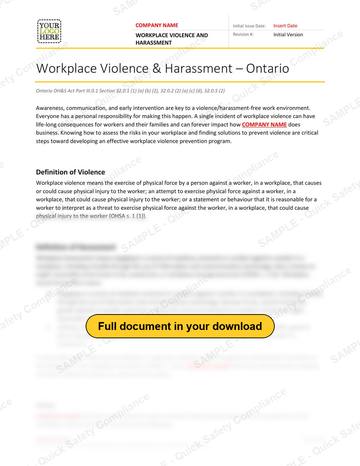
Separately, every employer must prepare policies on workplace violence and workplace harassment, review them at least annually (s. 32.0.1) and maintain programs to implement them (s. 32.0.2 and 32.0.6). A construction manual written for Ontario includes both, and the violence and harassment program is also sold as a single written program for clients who ask for it by name.
Constructor duties on a project
The Act defines a constructor as a person who undertakes a project for an owner, including an owner who undertakes the work themselves or through more than one employer. The constructor ensures the measures and procedures in the Act and regulations are carried out on the project, that every employer and worker complies, and that the health and safety of workers is protected (s. 23(1)).
Where the regulation requires it, the constructor gives the Ministry notice of the project before work begins (s. 23(2)); Ontario Regulation 213/91 sets out which projects need notice and what it contains. If you are a subcontractor, the constructor will expect your written program, your training records and your safe work practices before you start.
Health and safety representative or joint committee
Sections 8 and 9 of the Act set the thresholds. On construction projects there are special rules for short projects:
Sections 8 and 9 of the Occupational Health and Safety Act set out the requirements for health and safety representatives (section 8) and joint health and safety committees (section 9).
No. of Workers
Legislative requirement
1 to 5
You are not required to have a JHSC or a health and safety representative, unless a designated substance regulation applies to your workplace and it is not a construction project (JHSC required, s. 9 (2) (c)), or the Minister orders one.
6 to 19
You are required to have at least one health and safety representative, selected by the workers they represent (s. 8 (1)). If a designated substance regulation applies to your workplace (other than a construction project), you are required to have a JHSC (s. 9 (2) (c)).
20 to 49
You are required to have a JHSC (s. 9 (2) (a)). The committee must have at least two (2) members (s. 9 (6) (a)).
50 plus
You are required to have a JHSC. The committee must have at least four (4) members (s. 9 (6) (b)).
At least half the members must be workers who do not exercise managerial functions (s. 9 (7)), and at least one worker member and one management member must be certified members (s. 9 (12)). On a construction project, section 9 does not apply to a constructor where the work is expected to last less than three months (s. 9 (1) (a)), and certified members are not required on a project with fewer than 50 workers or expected to last less than three months (s. 9 (13)).
The Minister may order a committee or a representative at any workplace (ss. 8 (2), 9 (3)).
Fall protection and excavations
- Fall protection is required where a worker may fall more than 3 metres, or more than 1.2 metres where the work area is used as a path for a wheelbarrow or similar equipment, and at any height where a worker could fall into operating machinery, into water or another liquid, into or onto a hazardous substance or object, or through an opening in a work surface (O. Reg. 213/91, s. 26).
- No one enters an excavation that does not comply with Part III of the regulation (s. 224), and no work is done in a trench unless another worker is working above ground close to the trench or its access (s. 225).
- The walls of an excavation are supported by a support system unless one of the exceptions in s. 234 applies, for example an excavation less than 1.2 metres deep, or walls sloped to the gradient set for the soil type.
- Before an excavation begins, the employer doing the digging ensures all gas, electrical and other services in and near the area are accurately located and marked, and any service that may pose a hazard is shut off and disconnected (s. 228).
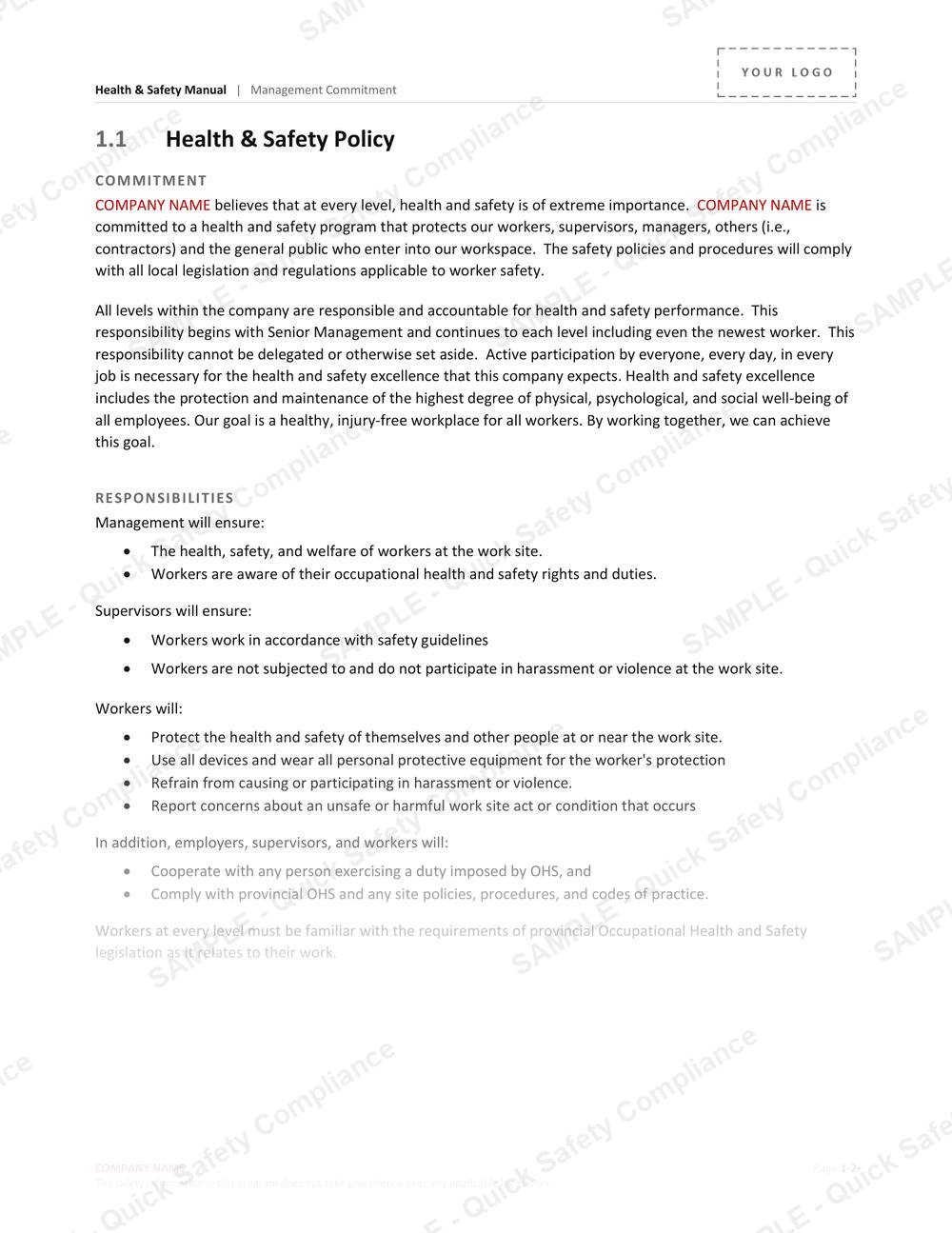
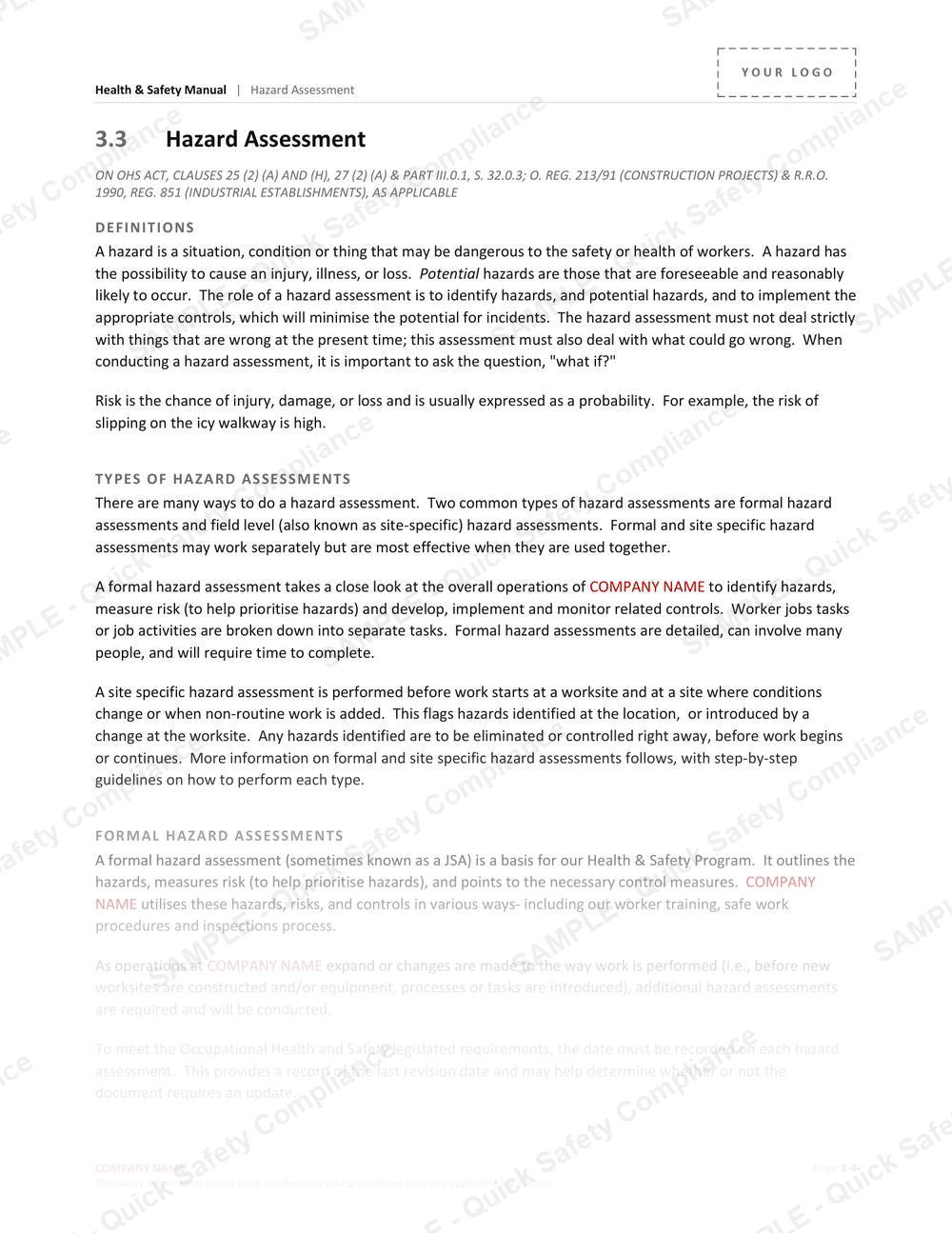
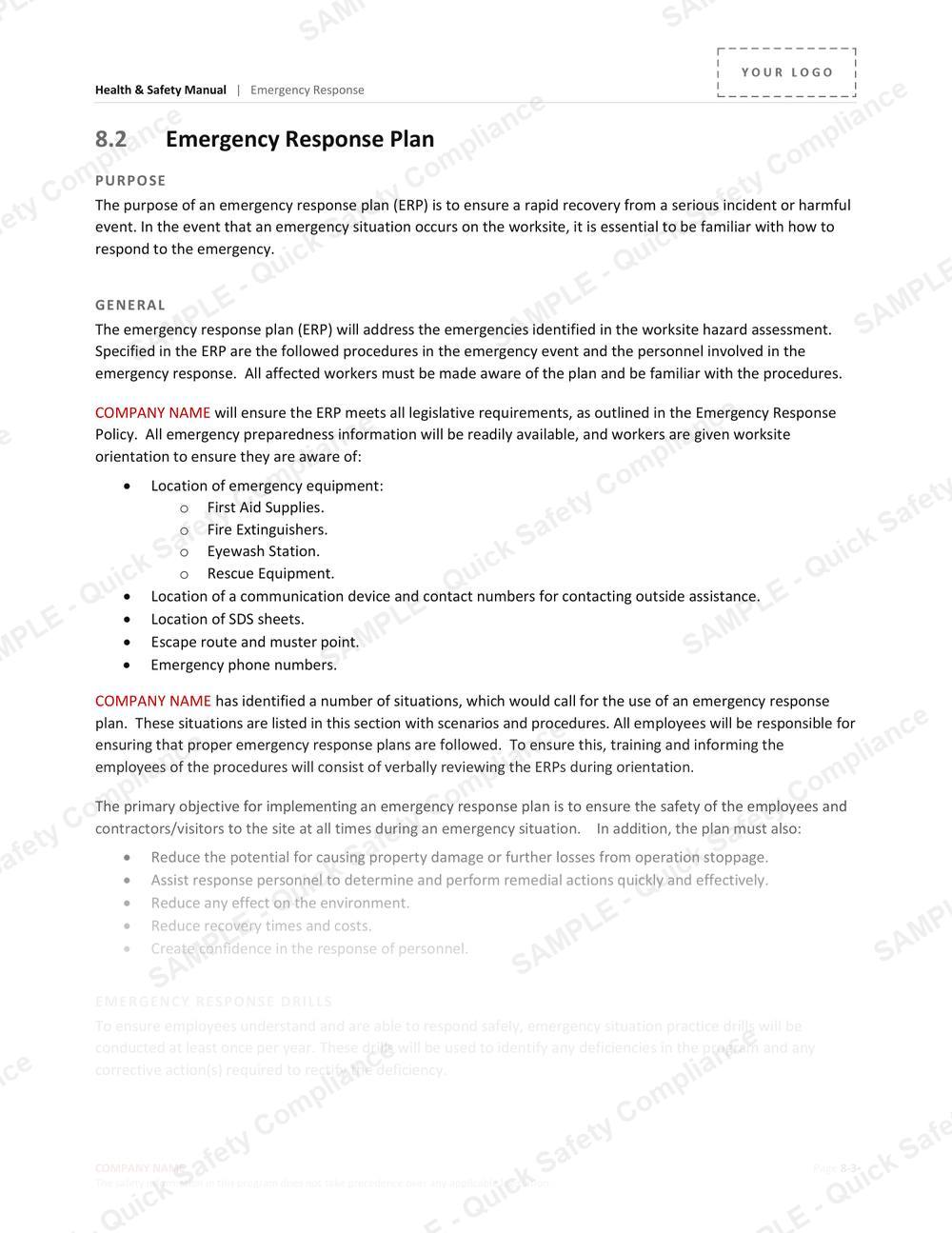
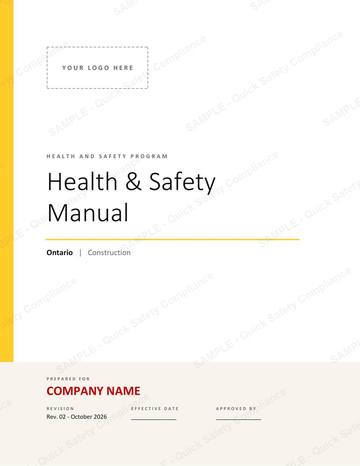
Real pages from the files you download. Tap a page to see it full size. From: Ontario Construction Safety Manual.
Notices of deaths, injuries and accidents
- A person killed or critically injured: notify an inspector, the committee or representative and the union immediately, and send a written report within 48 hours (s. 51(1)). The scene is not disturbed without an inspector's permission, except to save life, relieve suffering, keep an essential service running or prevent unnecessary damage.
- A person disabled from their usual work or needing medical attention because of an accident, explosion, fire or workplace violence: written notice within 4 days to the committee or representative and the union (s. 52(1)).
- At a construction project, an accident, explosion, fire, flood, equipment failure, cave-in or other prescribed incident, even if no one is hurt: written notice within 2 days (s. 53(1)).
- Copies of these reports and notices are kept for at least 3 years (O. Reg. 420/21, s. 6).
The right to refuse
A worker may refuse work they have reason to believe is likely to endanger them, including because of equipment, the condition of the workplace or workplace violence (s. 43). The supervisor or employer investigates with the worker and a worker member of the committee, the representative or another worker representative present. If the matter is not resolved, an inspector is called. No worker may be penalised for acting under the Act (s. 50).
How the Ontario construction manual covers it
The Ontario construction manual is built on the OHS Act and Ontario Regulation 213/91, with 39 safe work practices, the policy, the violence and harassment program, forms and the committee section, for $499. If ISNetworld asks for Ontario RAVS, the Ontario library is $149.
Read the legislation
Questions
I have 4 workers in Ontario. Do I need a written policy?
Clause 25 (2) (j) applies where more than 5 workers are regularly employed. Below that, you still need workplace violence and harassment policies, and clients usually ask for a written program before they hire you.
Who is the constructor on a renovation?
The person who undertakes the project for the owner, usually the general contractor. An owner who does the work through more than one employer can also be the constructor.
How long do I keep incident notices in Ontario?
At least 3 years for the reports and notices made under sections 51 to 53.1 of the Act (O. Reg. 420/21, s. 6).
Get the document today
See every section before you pay, download it in minutes and make it yours with your company name and logo.