ISNetworld RAVS by province: why Alberta, BC, Saskatchewan and Ontario programs differ
ISNetworld's RAVS review checks each written program against the regulations where the work happens, so the same topic reads differently in each province. A fall protection program, for example, needs a written fall protection plan at 3 metres in Alberta and Saskatchewan but at 7.5 metres in British Columbia, and excavation protection starts at 1.5 metres in Alberta but 1.2 metres in British Columbia, Saskatchewan and Ontario. Buy the version for the province your client's work is in. We sell 209 provincial RAVS written programs for Alberta, British Columbia, Saskatchewan and Ontario, plus Canada-wide industry practice versions, at $9 each.
By Quick Safety Compliance · · 4 min read
Why one national program is not enough
Your hiring client tells ISNetworld which programs it requires and for which jurisdiction. The reviewer then compares your document with the regulation for that jurisdiction. A program that cites the wrong province's law, or misses a requirement that only one province has, comes back with deficiencies to fix, and every round trip delays your grade with that client.
The differences are rarely in the general approach. They are in the numbers, the triggers and the paperwork the law asks for. The examples below show where they bite.
Fall protection
- Alberta: protection where a worker may fall 3 metres or more, more than 1.2 metres at a permanent work area, or any distance with an unusual possibility of injury (OHS Code, s. 139). A written fall protection plan where a worker may fall 3 metres or more without guardrails (s. 140).
- British Columbia: protection from 3 metres, or less where the fall carries more risk than landing on a flat surface (OHS Regulation, s. 11.2). A written plan where a fall of 7.5 metres or more may occur without permanent guardrails (s. 11.3).
- Saskatchewan: protection at 3 metres, or less where a fall could cause injury (OHS Regulations, 2020, s. 9-2). A written plan where a worker may fall 3 metres or more without a guardrail or similar barrier (s. 9-3).
- Ontario construction: protection where a worker may fall more than 3 metres, or more than 1.2 metres where the work area is used as a path for a wheelbarrow or similar equipment, and at any height where a worker could fall into operating machinery, water or a hazardous substance (O. Reg. 213/91, s. 26).
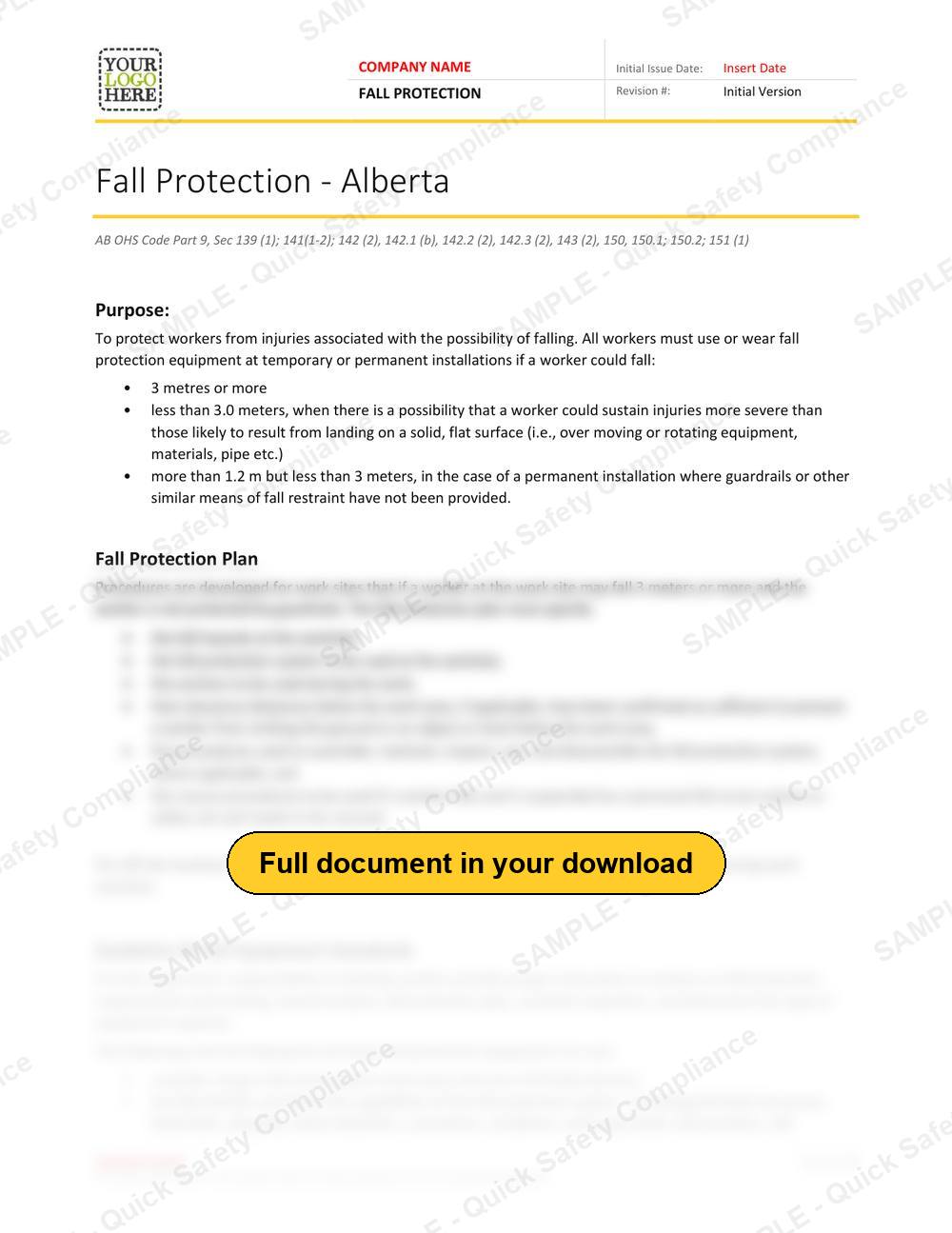
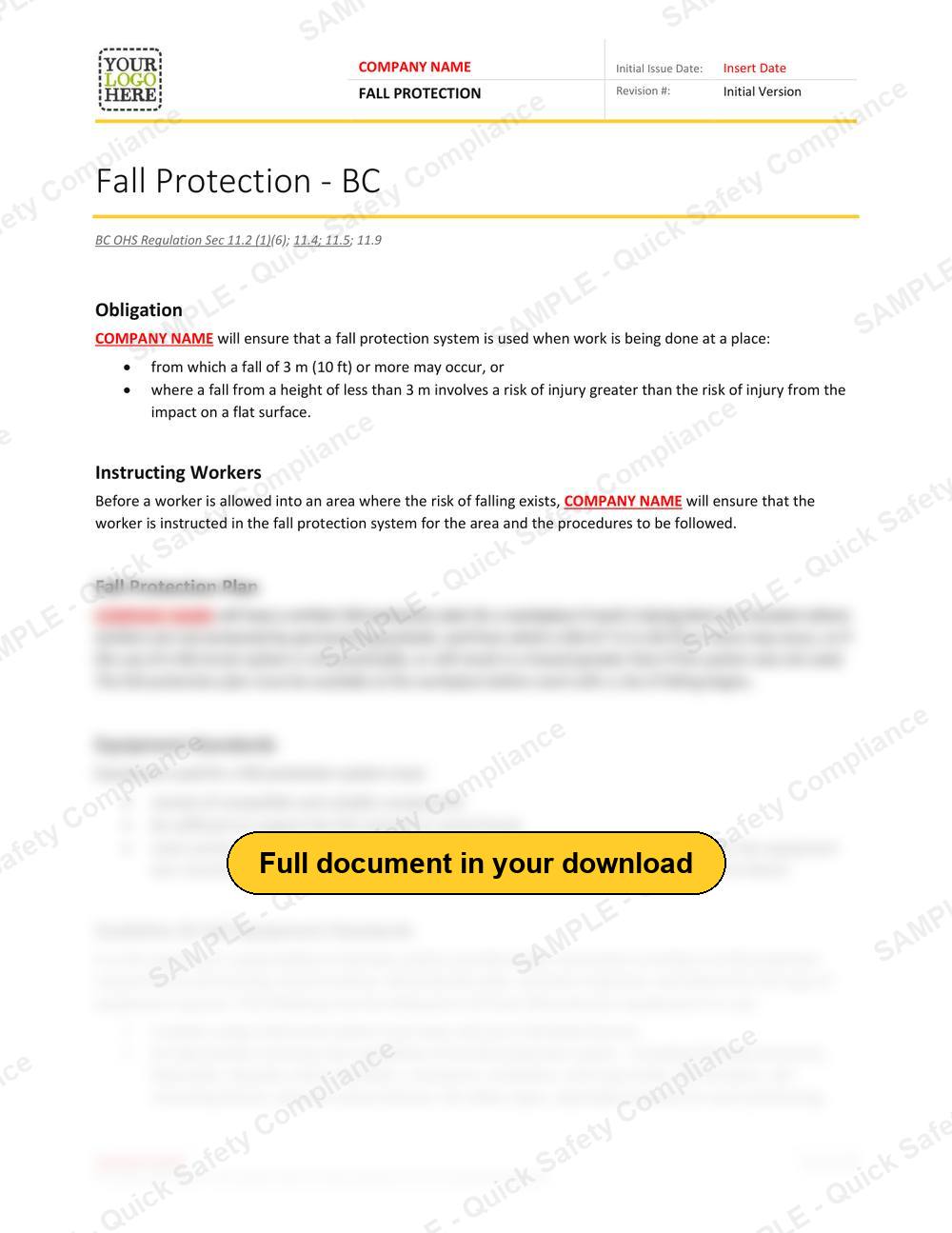
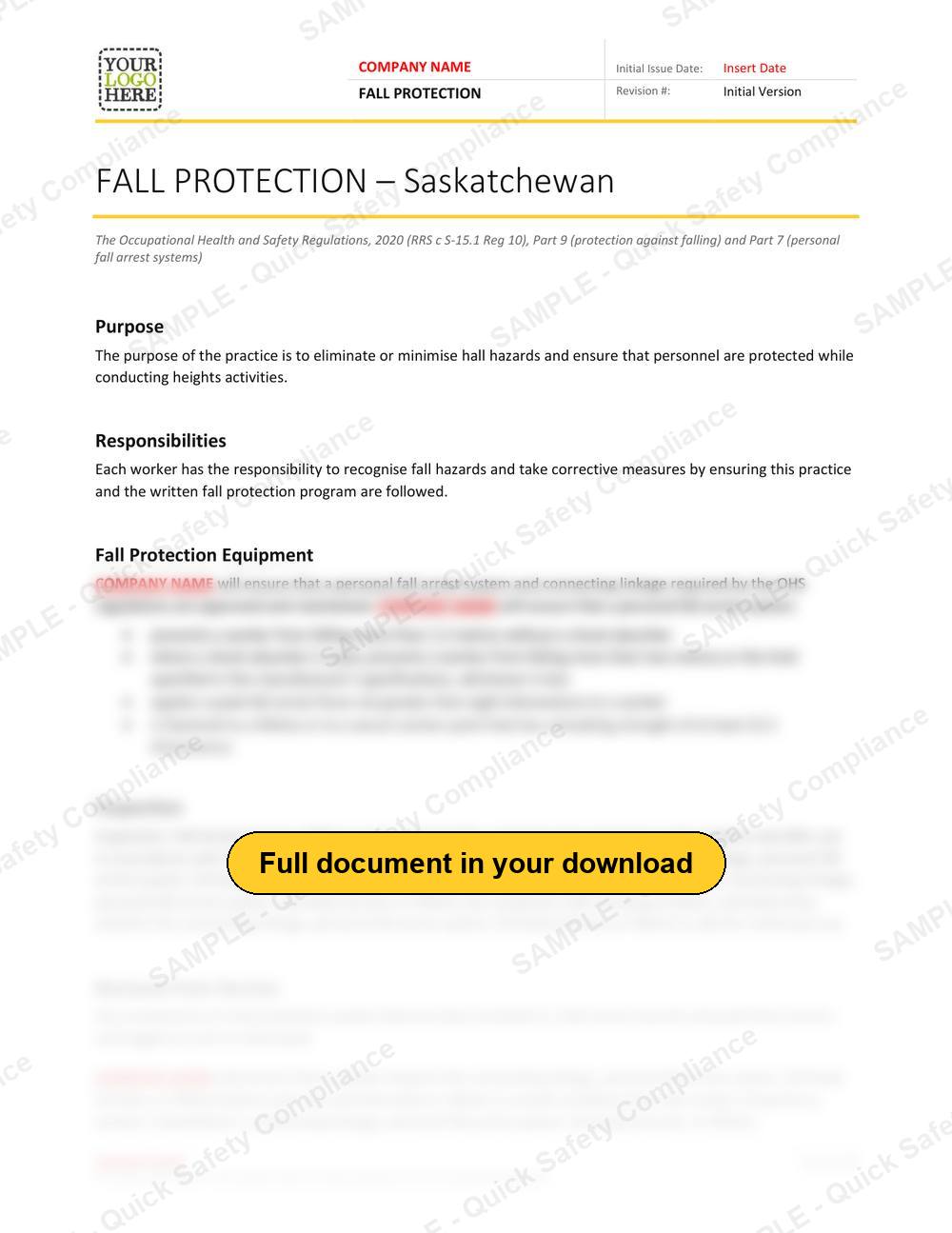
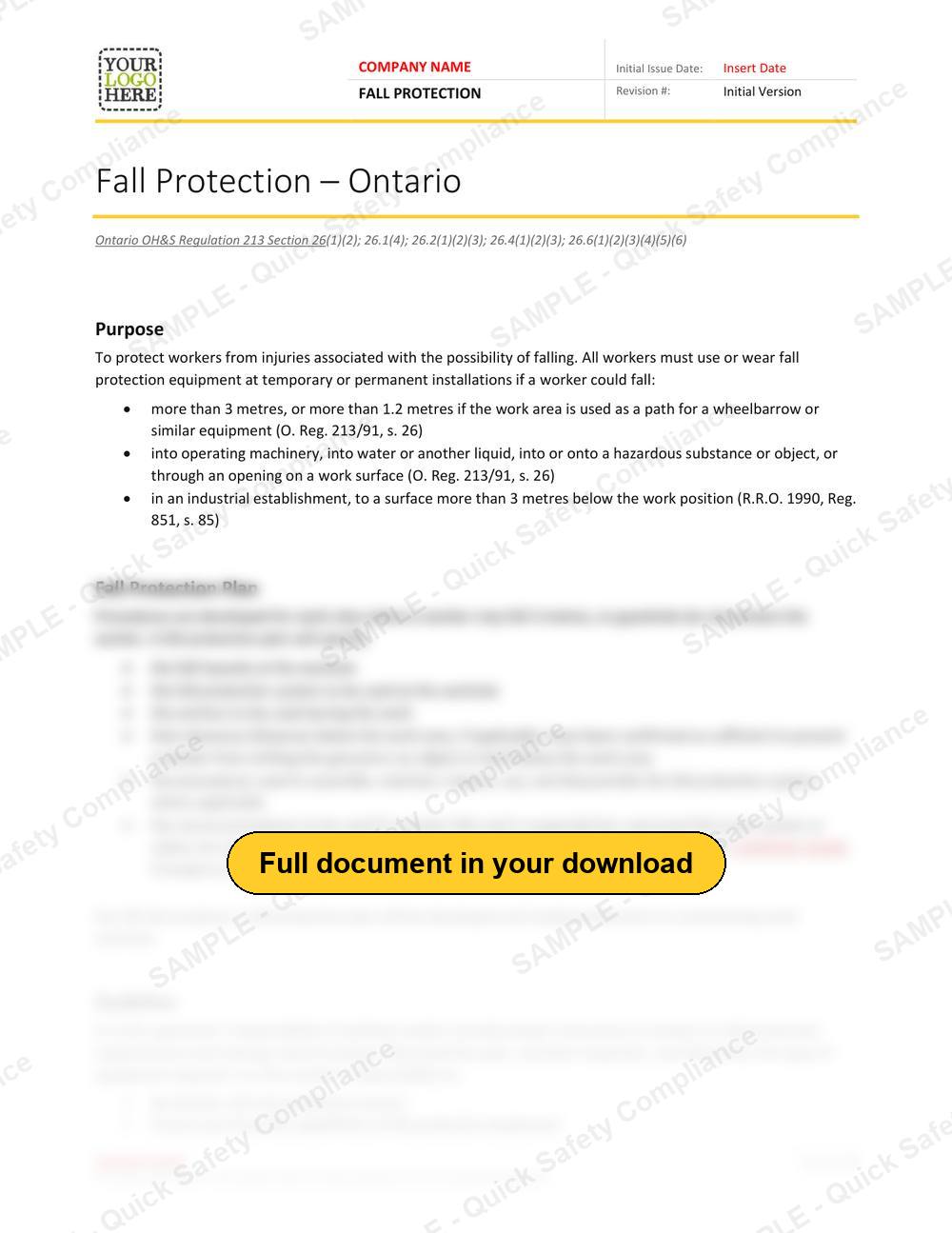
Real pages from the files you download. Tap a page to see it full size. From: Fall Protection RAVS - Alberta, Fall Protection RAVS - British Columbia, Fall Protection RAVS - Saskatchewan, Fall Protection RAVS - Ontario.
Excavation and ground disturbance
- Alberta: cave-in protection before a worker enters an excavation more than 1.5 metres deep and is closer to the wall than its depth (OHS Code, s. 450), and buried facilities located and marked before any ground disturbance (s. 447 and 448).
- British Columbia: sloping, benching or support for an excavation over 1.2 metres deep (OHS Regulation, s. 20.81), and written instructions from a qualified registered professional for one more than 6 metres deep (s. 20.78).
- Saskatchewan: protection for a worker in an excavation or trench more than 1.2 metres deep, and, within 600 millimetres of an existing pipeline, cable or conduit, the facility exposed by hand digging or another approved method before mechanical digging (OHS Regulations, 2020, Part 17).
- Ontario construction: a support system unless an exception in s. 234 applies, for example an excavation less than 1.2 metres deep, and no work in a trench unless another worker is above ground nearby (O. Reg. 213/91, s. 225).
Hydrogen sulphide and working alone
- Alberta's OHS Code requires a code of practice for hydrogen sulphide and sets its exposure limit at 10 ppm over 8 hours with a 15 ppm ceiling (Part 4 and Schedule 1). Saskatchewan sets 10 ppm as an 8-hour average and 15 ppm as a 15-minute average (Table 18). British Columbia applies the limits in Part 5 of its Regulation, and Ontario those in Regulation 833.
- Working alone has its own part in Alberta (OHS Code, Part 28) and its own sections in British Columbia (s. 4.20.1 to 4.23) and Saskatchewan (s. 3-24). Ontario has no working alone regulation, so an Ontario program rests on the general duty to take every reasonable precaution.
Which version to buy
- Work in one province: buy that province's programs. Each one is written for its province and cites its legislation.
- Work in several provinces for the same client: check which jurisdiction the client set for each program in ISNetworld, and buy those.
- Client accepts Canada-wide industry practice, or the topic is not law-specific (for example fatigue management or journey management): the Canada industry practice version fits.
- Need most of a province's list: a whole library costs less than buying a dozen programs one at a time.
- Alberta76 programs, $9 eachWhole library $299
- British Columbia57 programs, $9 eachWhole library $229
- Saskatchewan53 programs, $9 eachWhole library $229
- Manitoba27 programs, $9 eachSingle programs
- Ontario23 programs, $9 eachWhole library $149
- Federal26 programs, $9 eachSingle programs
- Canada Industry Practice61 programs, $9 eachWhole library $229
- Quality23 programs, $9 eachSingle programs
- ESG12 programs, $9 eachSingle programs
Before you upload
Replace COMPANY NAME with your legal company name everywhere, add your logo, and fill in anything site-specific the program asks for, such as who is responsible and where records are kept. Read it once against how your crews actually work: a reviewer accepts the document, but your client's auditors and your own workers will hold you to it.
Read the legislation
Official sources
- Alberta Occupational Health and Safety Code (King's Printer)
- BC OHS Regulation, Part 4: general conditions (including working alone)
- BC OHS Regulation, Part 11: fall protection
- BC OHS Regulation, Part 20: construction, excavation and demolition
- The Occupational Health and Safety Regulations, 2020 (Saskatchewan Publications Centre)
- Ontario Regulation 213/91: Construction Projects (e-Laws)
Questions
Can I upload an Alberta program for work in Saskatchewan?
It is likely to come back with deficiencies, because the reviewer checks it against Saskatchewan's regulations, which use different numbers and sections. Buy the Saskatchewan version for Saskatchewan work.
How many RAVS programs will I need?
Your hiring client decides, based on the work you do. Log in to ISNetworld, check the programs marked as required for each jurisdiction, then buy those topics.
Are the RAVS programs editable?
Yes. Each is a Word document, $9 CAD, with instant download.
Get the document today
See every section before you pay, download it in minutes and make it yours with your company name and logo.