Running a short service worker program on site: mentors, markers and sign-off
A short service worker program works when everyone on site can tell who is new, every new worker has a named mentor, crews never carry more new workers than the program allows, and nobody comes off the program until a supervisor has checked their competency and signed them off. Clients in oil and gas and construction often ask for the written program; this post covers running it, from the first day to the sign-off. Orientation before work begins is also a legal duty in several provinces, so the records you keep here do double duty.
By Quick Safety Compliance · · 4 min read
Decide who is a short service worker
Write the definition down and apply it the same way every time. Most programs cover workers who are new to the company and workers who are new to the type of work, even if they have years in another trade, and set the period in months. Some clients set their own period and you must use theirs on their sites, so check the contract.
Put the period, the crew limit and the sign-off steps in the written program, and make the site supervisor responsible for applying them.
Set the crew limit
A crew needs enough experienced workers to supervise the new ones. Set a ratio, for example no more than one short service worker on a small crew, and say what happens when a job needs more: a second mentor, a written variance approved by a manager, or a client's approval where the client requires it. Record every variance.
Assign a mentor and mark the worker
Each short service worker is assigned to a named, experienced worker who stays on the same crew, checks the new worker's hazard assessments, shows them how the work is done and stops unsafe work. The mentor's name goes on the orientation record.
Make new workers visible. A green hand sticker on the hard hat is a common marker on Canadian sites: it tells everyone, including other employers' workers, to look out for that person and to step in if something looks wrong.
New Worker Green Hand Hard Hat Sticker

Short Service Employee RAVS - Alberta
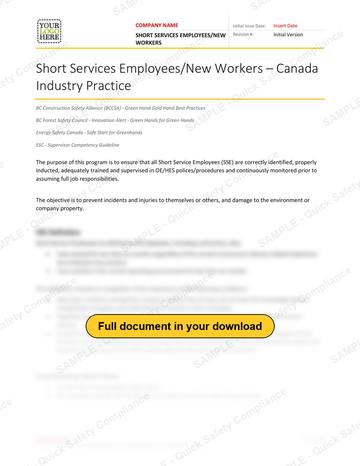
Short Service Employees and New Workers RAVS - Canada Industry Practice

Green Hand Program RAVS - Canada Industry Practice
Orient before the first task
Orientation comes before the first task, not at the end of the first week. British Columbia, for example, requires that a young or new worker is given health and safety orientation and training specific to the workplace before starting work (OHS Regulation, s. 3.23(1)), and Saskatchewan bars anyone under 16 from construction sites and drilling or servicing rigs (OHS Regulations, 2020, s. 3-3).
Cover the site hazards, emergency procedures, the right to refuse unsafe work, how to report hazards and incidents, the PPE required and the safe work practices for the tasks the worker will do. The Worker Orientation Checklist and 30-Day Check-In in the Implementation Kit has a six-part checklist with worker initials and sign-off.

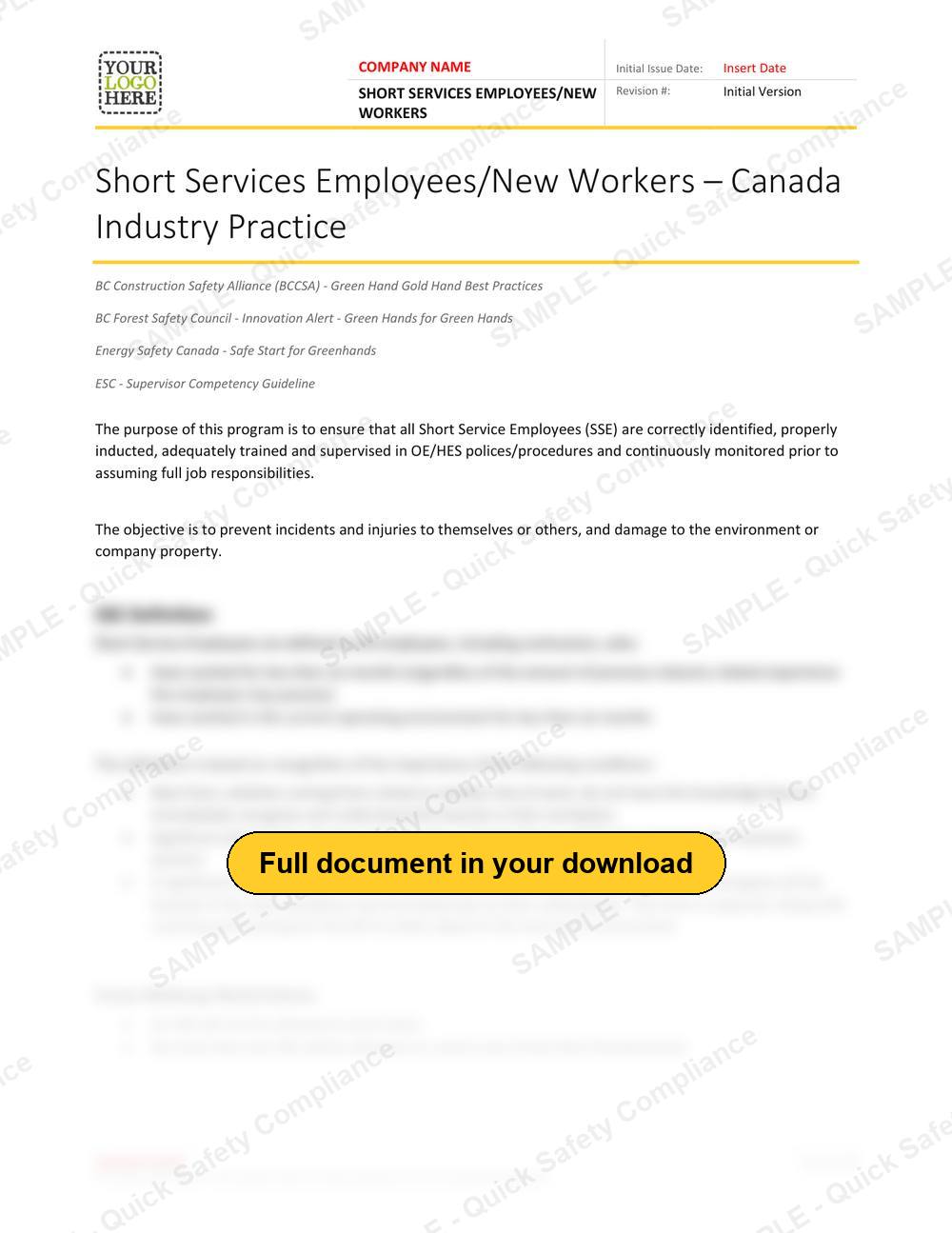
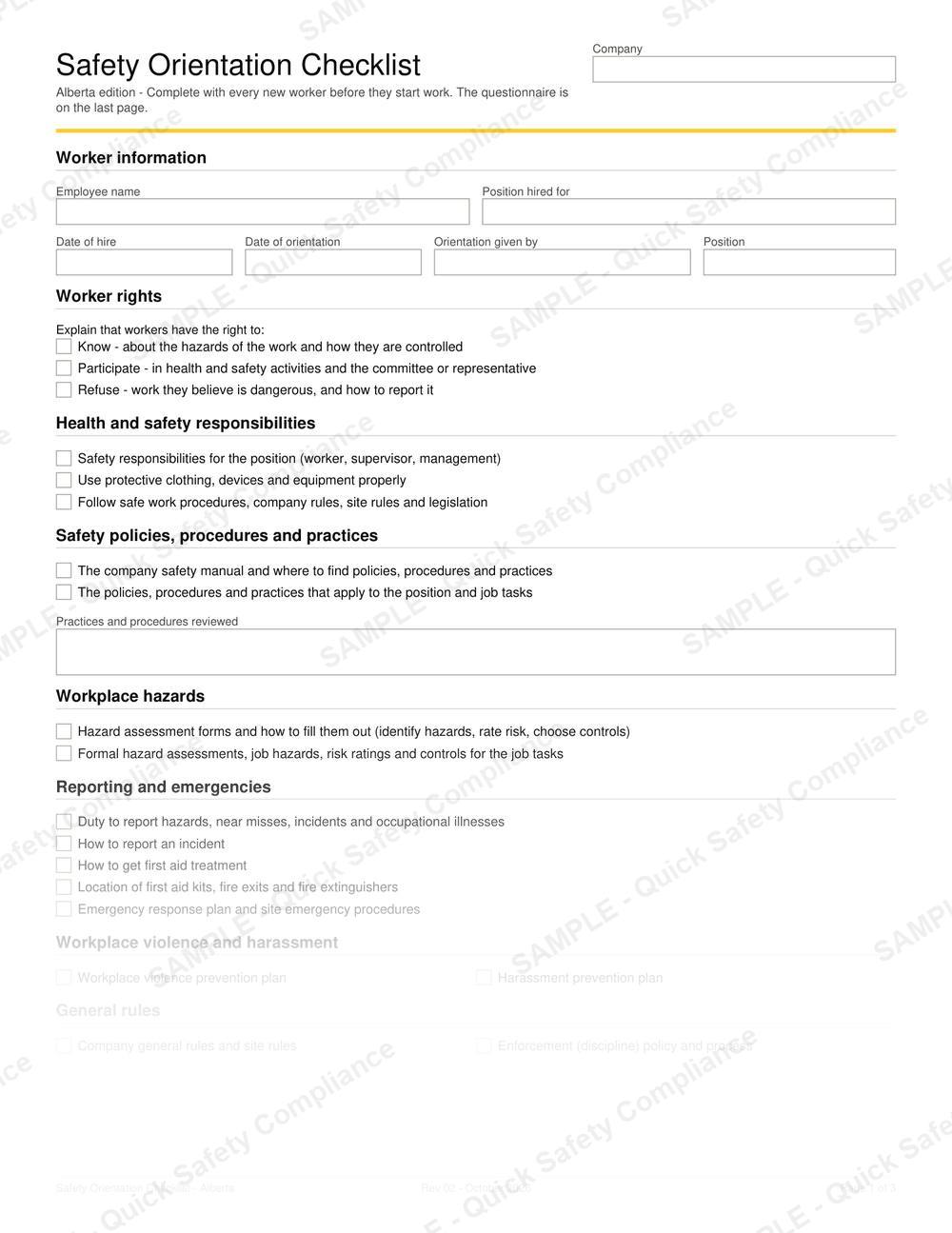
Real pages from the files you download. Tap a page to see it full size. From: Short Service Employee RAVS - Alberta, Short Service Employees and New Workers RAVS - Canada Industry Practice, Alberta Oil and Gas Safety Manual.
Check in at 30 days
Sit down with the worker and the mentor about a month in. Ask what the worker has done, what they are unsure of and whether anyone has asked them to do something they had not been shown. Record what the supervisor has observed and any training still needed. The 30-day check-in guide in the kit gives you the questions and a place for the actions.
Sign the worker off
At the end of the period, the supervisor confirms the worker can do the regular tasks safely without close supervision. Use a competency evaluation that lists the tasks, records how each was checked (observed, discussed or tested) and is signed by the supervisor and the worker. Only then does the sticker come off. If the worker is not ready, extend the period in writing.
Mistakes that undo the program
Each of these is easy to prevent with a one-page list kept by the site supervisor: name, start date, mentor, crew, and the dates of orientation, 30-day check-in and sign-off.
- The mentor is on a different crew, or changes every week, so nobody actually watches the new worker.
- The sticker comes off on a date instead of after a competency check.
- Crews quietly carry more new workers than the limit when a job gets busy, with no written variance.
- Orientation happens at the end of the first week, after the worker has already done the risky tasks.
- Nobody tracks who is on the program, so sign-offs are missed and the records cannot be found when a client asks.
Records a client will ask for
- The written short service worker program.
- A list of current short service workers, their start dates, mentors and expected sign-off dates.
- Signed orientation checklists and 30-day check-ins.
- Signed competency evaluations for every worker taken off the program.
- Any approved variances to the crew limit.
Read the legislation
Questions
How long is a short service period?
Programs commonly set a period in months, and many clients set their own. Use the client's period on their sites, and write your default into your program.
Does an experienced worker new to my company count?
Most programs say yes, because they do not know your sites, equipment or procedures yet. Some shorten the period for experienced workers once a supervisor has checked their competency; write that rule down if you use it.
Where do I get green hand stickers?
The New Worker green hand hard hat sticker is printed and shipped from this store.
Get the document today
See every section before you pay, download it in minutes and make it yours with your company name and logo.